Learning · Phase 5

The Book of Acts

How the Church began — from one upstairs room to the ends of the earth.

28 chapters · 24 sections · New Testament · History

The Ascension and the Promise

Section 1

Acts 1:1–11

The Ascension and the Promise

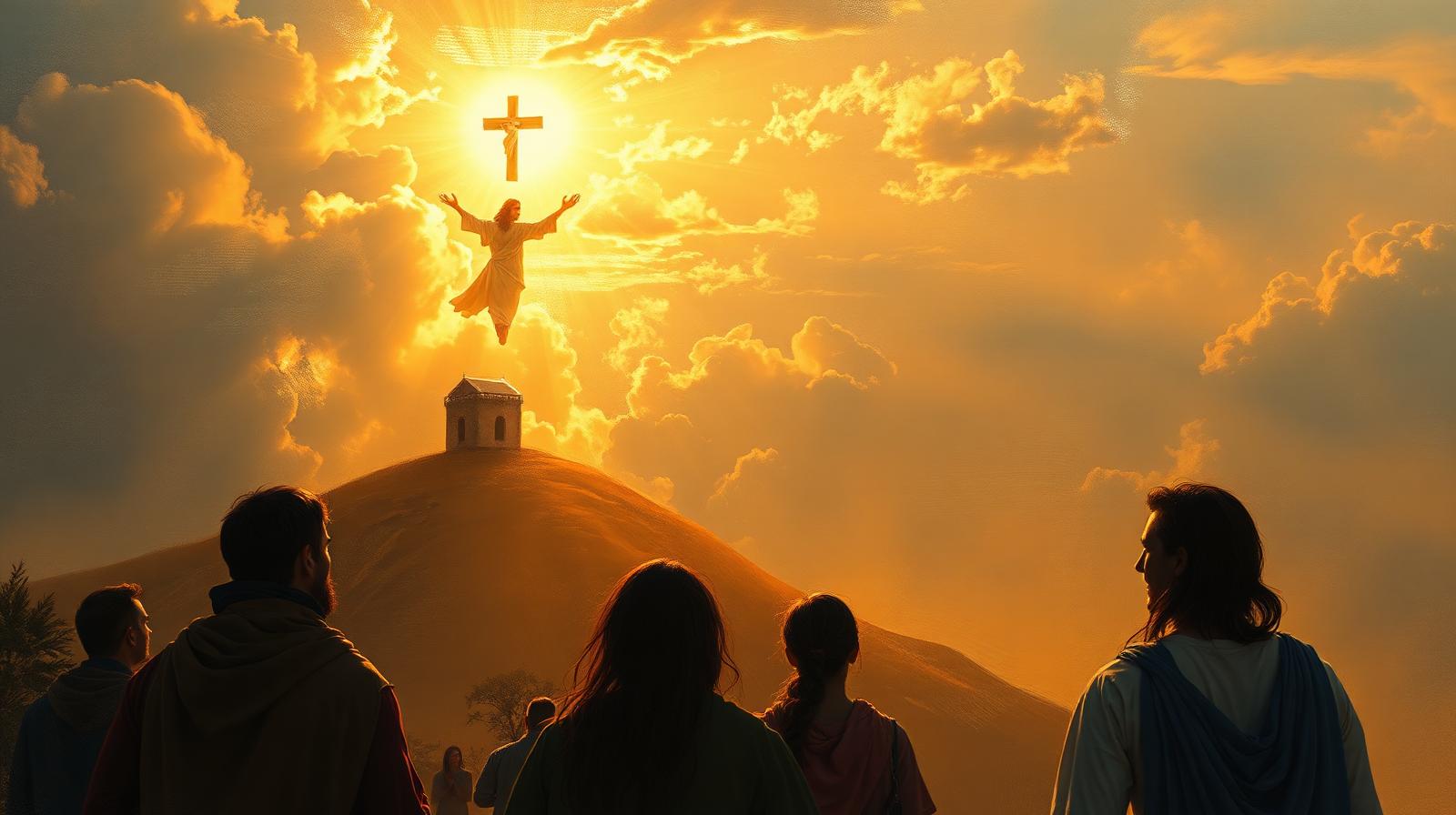
Luke opens by reminding Theophilus where the first volume ended: Jesus, alive again after his suffering, appearing to his followers over forty days, "giving many convincing proofs that he was alive." This isn't wishful thinking or a rumour. Luke wants it on record that the risen Jesus was seen, repeatedly, by people who ate with him.

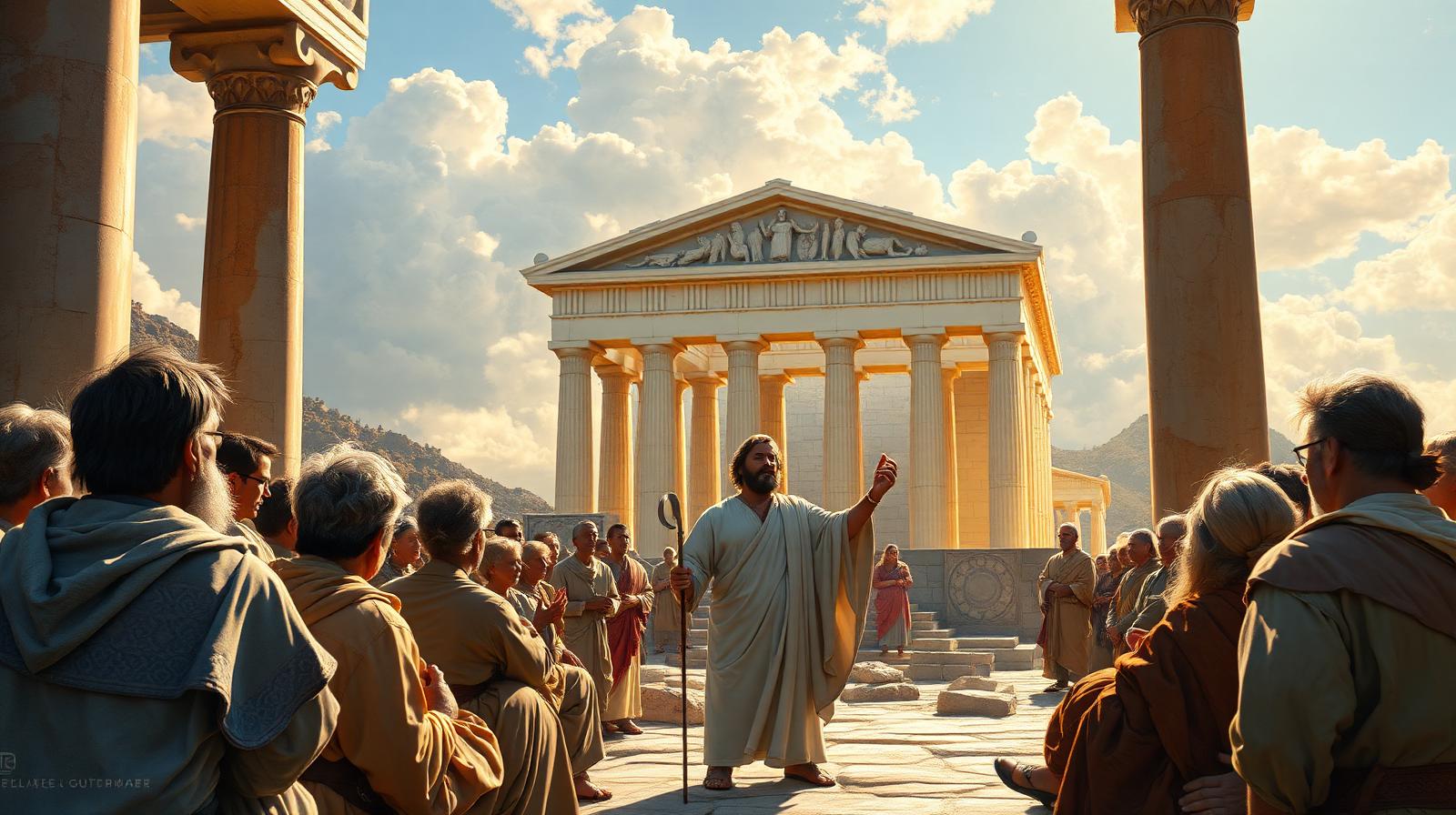
Then Jesus gives his final instructions. Don't leave Jerusalem yet. Wait for the gift the Father promised — the Holy Spirit. The disciples, still thinking in political terms, ask the question on their minds: "Are you now going to restore the kingdom to Israel?" Jesus redirects them completely. The timing isn't their business. Their job is: "You will receive power when the Holy Spirit comes on you; and you will be my witnesses in Jerusalem, and in all Judea and Samaria, and to the ends of the earth."

That sentence is the table of contents for the entire book.

And then he is taken up before their eyes, and a cloud hides him. The disciples stand there, staring at the sky, until two men in white appear beside them: "Why do you stand here looking into the sky? This same Jesus… will come back in the same way you have seen him go."

Watch · The Bible Project

LUMO Acts Ep.1 — The Spirit Descends and the Church is Born

What God is communicating

The mission was never meant to stay with Jesus alone, and it was never meant to be carried by human effort alone. Before the disciples do anything, they are told to wait — for power they don't have on their own. And notice the reach of the promise: not just their city, not just their people, but the ends of the earth. From the first page, this is a story with room for everyone in it — including you.

Memory verse
But you will receive power when the Holy Spirit comes on you; and you will be my witnesses in Jerusalem, and in all Judea and Samaria, and to the ends of the earth.

Acts 1:8

Waiting, and Choosing Matthias

Section 2

Acts 1:12–26

Waiting, and Choosing Matthias

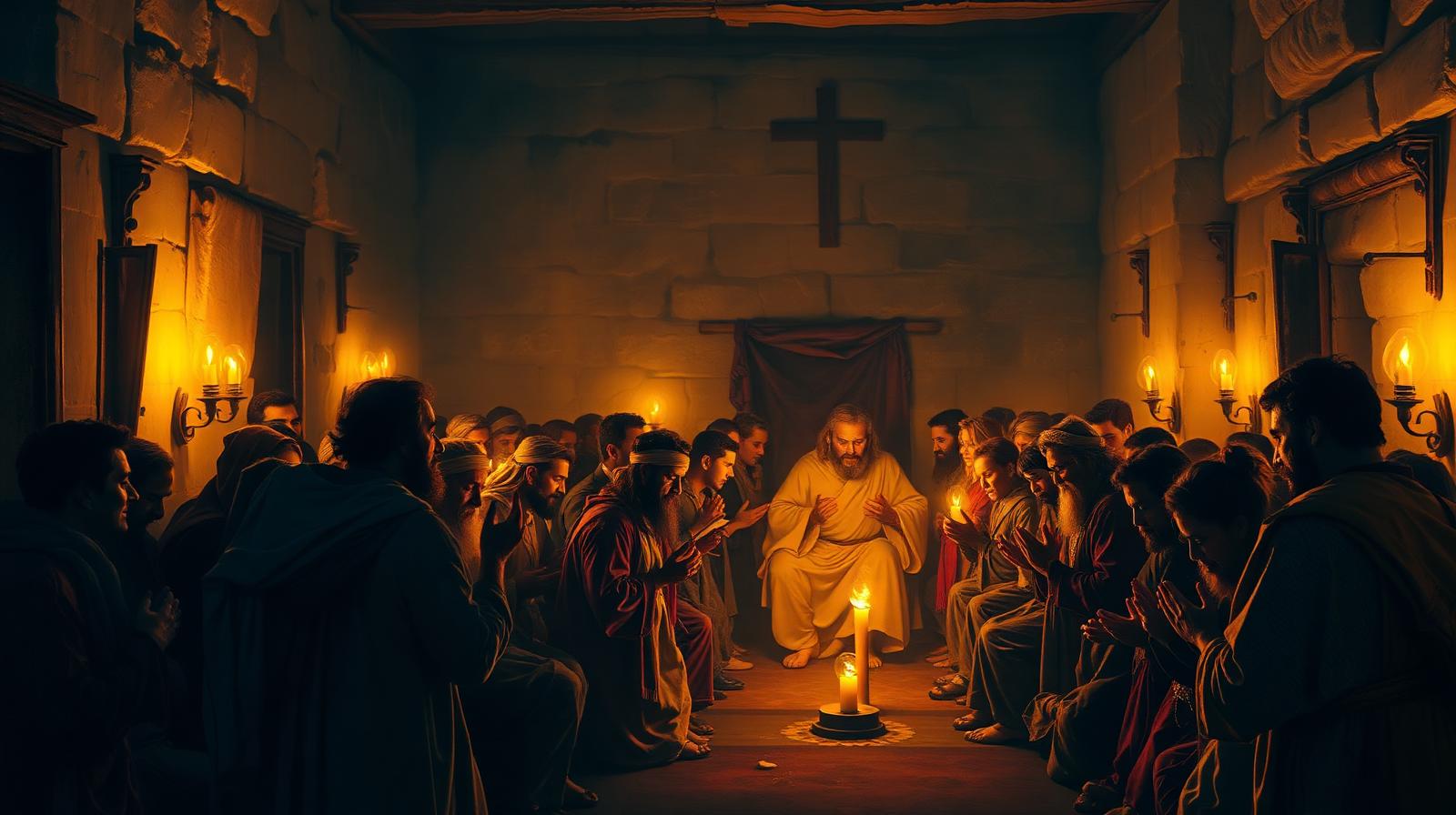
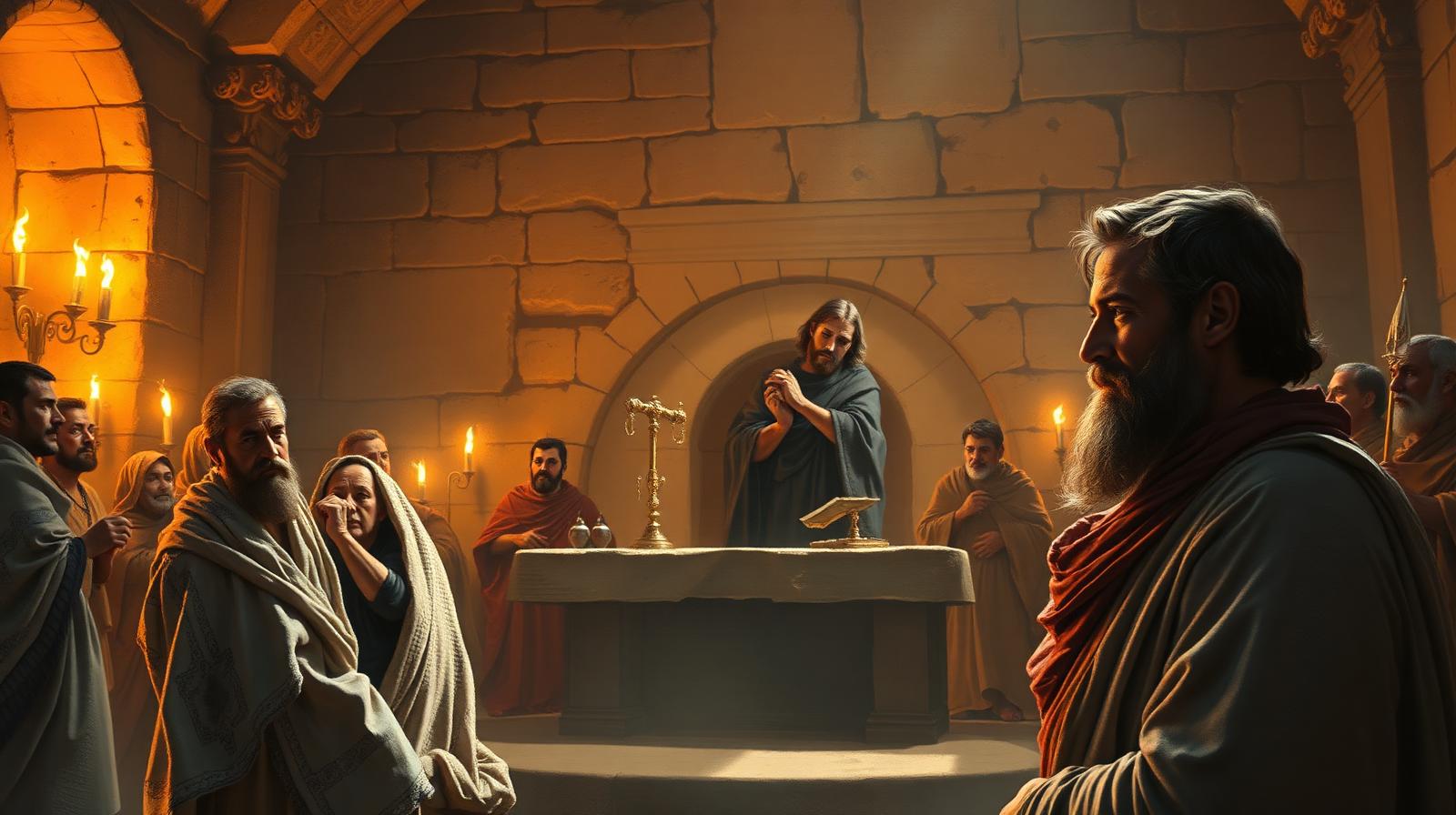
The disciples do exactly what they're told. They go back to Jerusalem, to the upstairs room, and they wait — and they pray. Luke names them, all eleven, plus the women, plus Mary the mother of Jesus, plus Jesus' brothers (who, notably, did not believe in him during his ministry and now do). About 120 people in all.

While they wait, Peter raises an unfinished piece of business: Judas. The one who betrayed Jesus is gone, and his place among the Twelve is empty. Peter sees this as something Scripture anticipated, and proposes they fill the vacancy. The qualification is specific and revealing: it must be someone who was with them the whole time, "beginning from John's baptism to the time when Jesus was taken up." An apostle is, first and foremost, a witness — someone who saw it all and can testify.

They put forward two men, Joseph called Barsabbas and Matthias. Then they pray and cast lots — an Old Testament way of leaving the decision to God — and the lot falls to Matthias. He is added to the eleven.

Watch · The Bible Project

LUMO Acts Ep.1 — The Spirit Descends and the Church is Born

What God is communicating

Before the fireworks of Pentecost, there is a quiet chapter of waiting, praying, and getting the house in order. The early church didn't manufacture momentum; it prepared and trusted. And the standard for leadership here is humble: not the most impressive person, but a faithful witness who was simply there. God often builds his work on the people who stayed.

Memory verse
They all joined together constantly in prayer, along with the women and Mary the mother of Jesus, and with his brothers.

Acts 1:14

Pentecost: The Spirit Falls

Section 3

Acts 2:1–13

Pentecost: The Spirit Falls

Pentecost was a Jewish harvest festival, fifty days after Passover, and Jerusalem was packed with pilgrims from every corner of the empire. The believers are all together in one place when it happens.

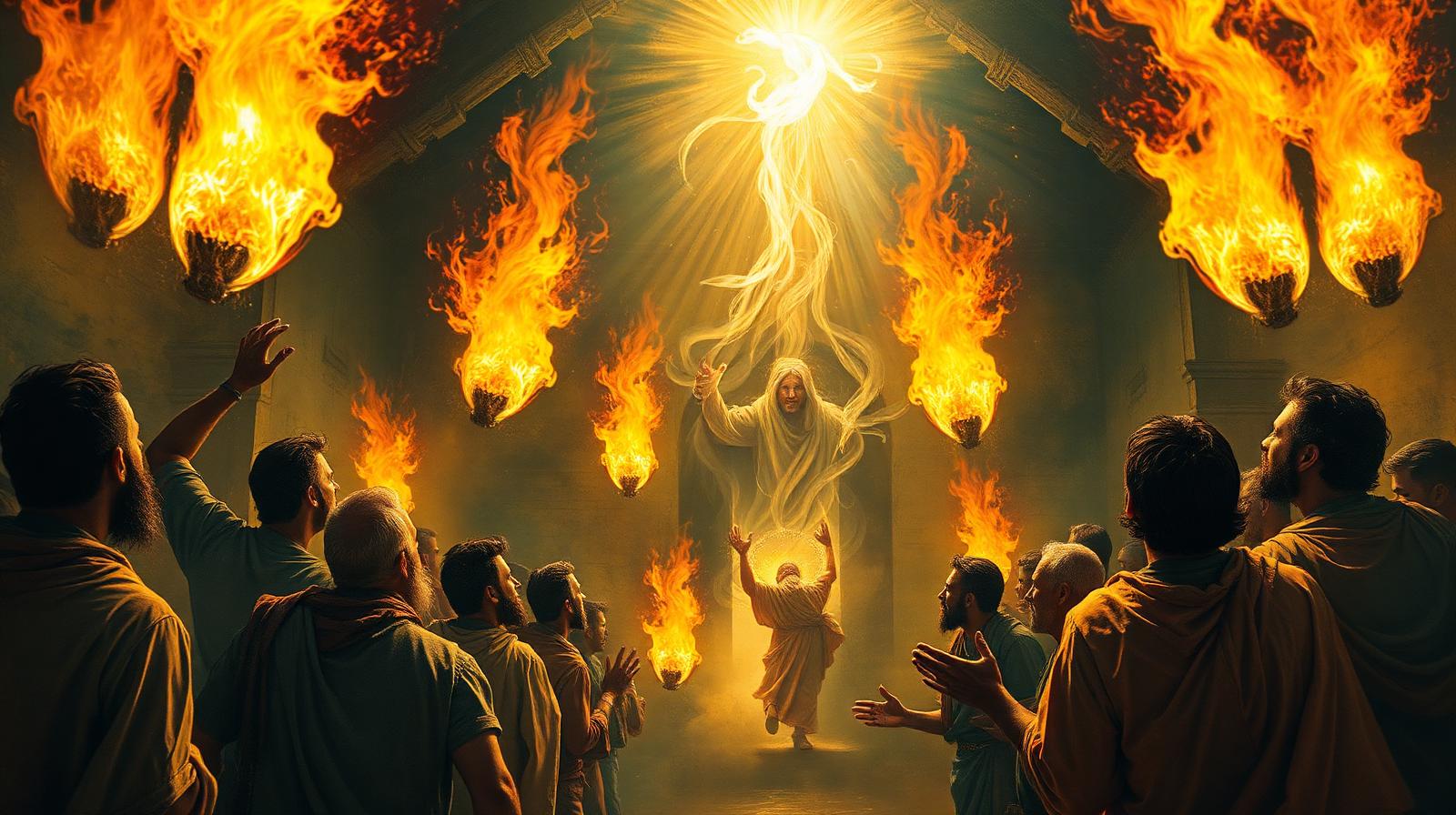
First a sound — like a violent rushing wind — fills the whole house. Then what looked like tongues of fire come to rest on each of them. And they are all filled with the Holy Spirit and begin to speak in other languages, as the Spirit gives them the words.

The noise draws a crowd, and the crowd is stunned. These are Galileans — small-town northerners — yet every visitor hears them speaking his own native language. Luke lists them: Parthians, Medes, Elamites, residents of Mesopotamia, Egypt, Rome, Crete, Arabia. "We hear them declaring the wonders of God in our own tongues!" Some are amazed and confused. Others sneer: "They've had too much wine."

Watch · The Bible Project

LUMO — The Promise of the Holy Spirit

What God is communicating

At the Tower of Babel, human pride scattered people and confused their languages. At Pentecost, God begins to reverse that — not by erasing the languages, but by speaking the good news into every one of them. The message of God is not the property of one culture. From the very first moment the church goes public, heaven makes the point: everyone gets to hear this in their own language.

Memory verse
All of them were filled with the Holy Spirit and began to speak in other tongues as the Spirit enabled them.

Acts 2:4

Peter's Sermon and the First Church

Section 4

Acts 2:14–47

Peter's Sermon and the First Church

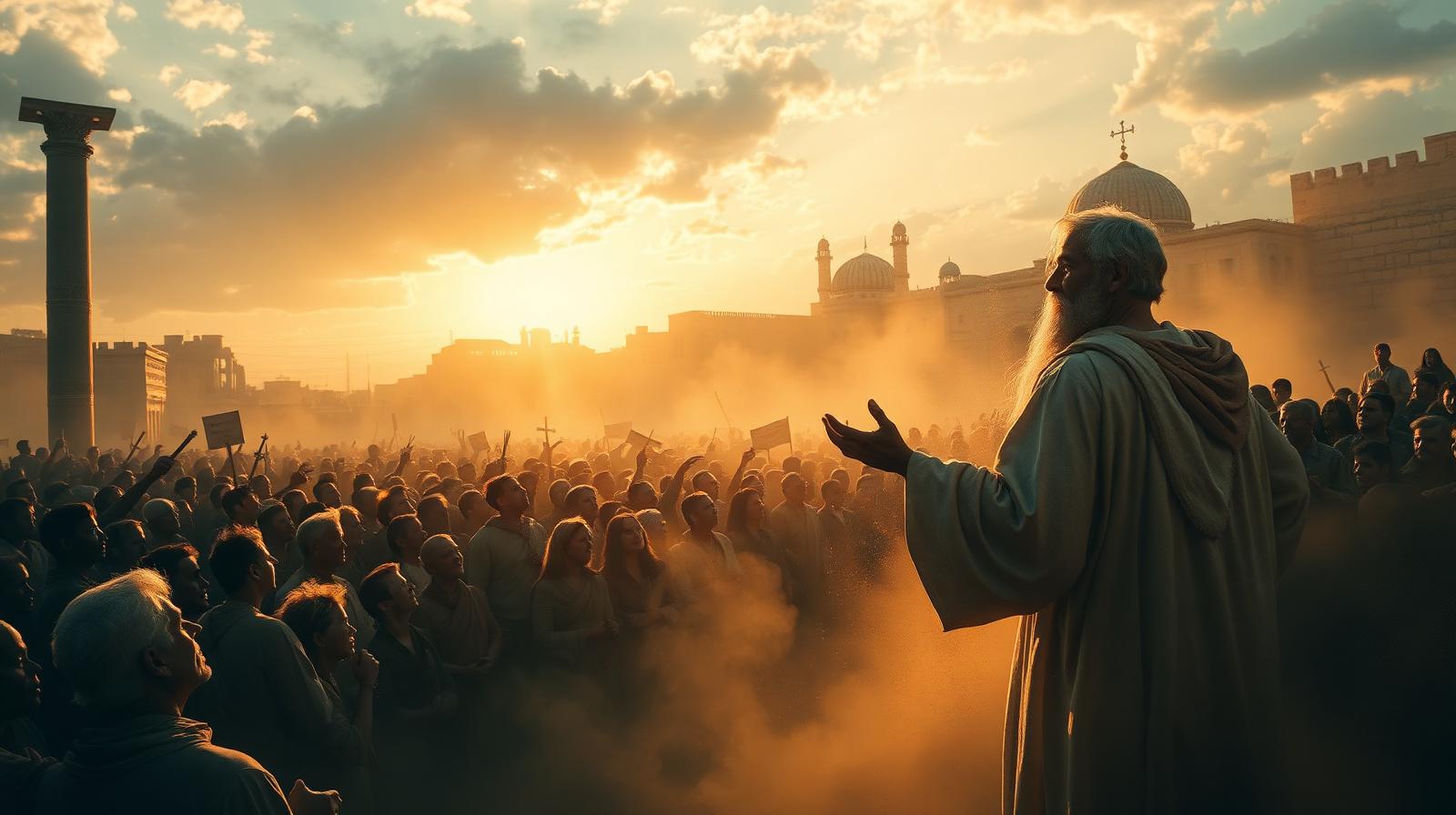
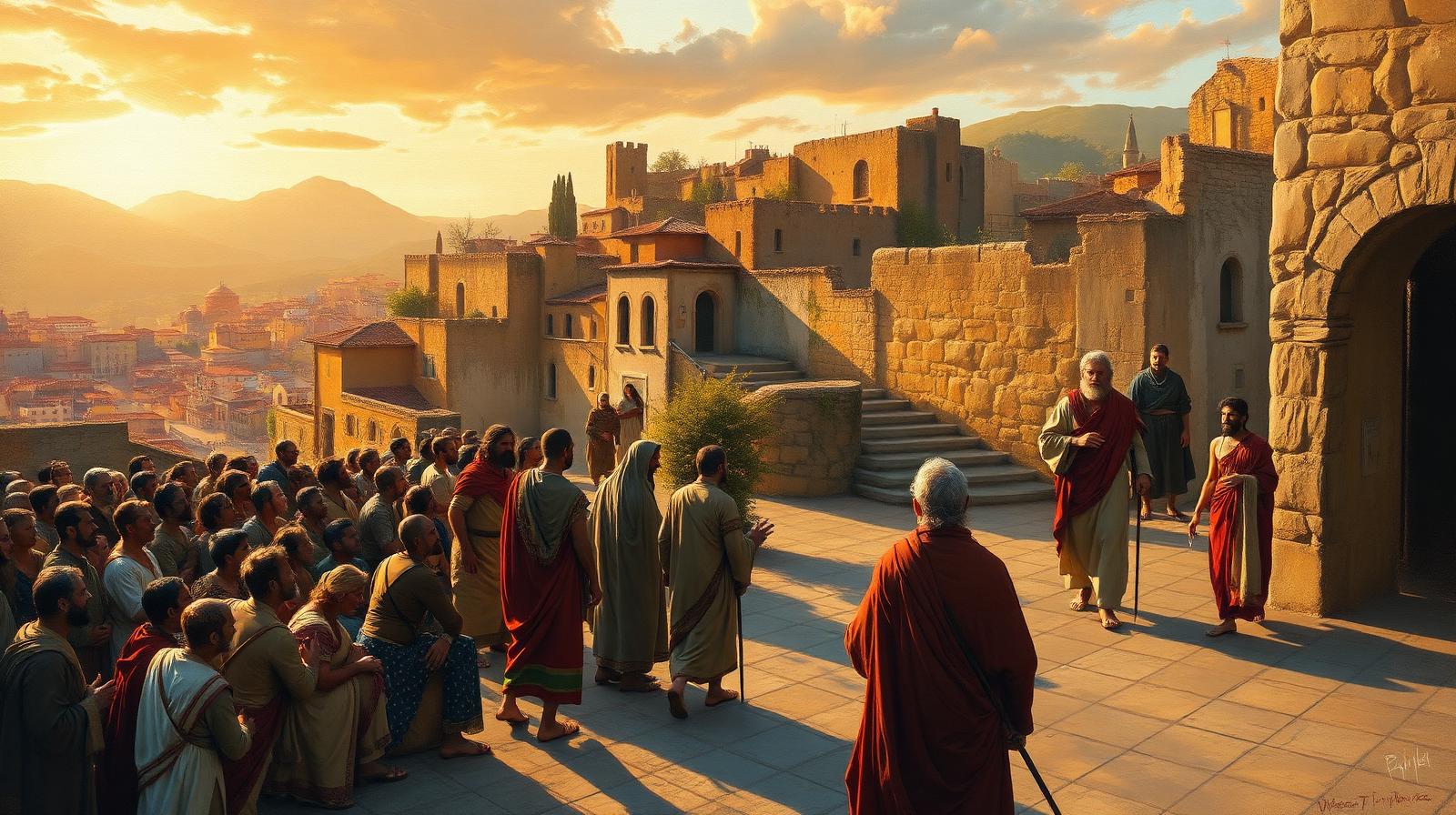
Peter — the same man who weeks earlier denied even knowing Jesus to a servant girl — stands up in front of thousands and preaches. It is the first Christian sermon, and it is fearless.

He explains that this is not drunkenness but the fulfilment of the prophet Joel: God is pouring out his Spirit on all people. Then he goes straight to the point: Jesus of Nazareth, proven by miracles, was handed over and crucified — "and you, with the help of wicked men, put him to death." But God raised him from the dead, and "we are all witnesses of it." This Jesus, Peter says, is both Lord and Messiah.

The crowd is "cut to the heart." They ask: "What shall we do?" Peter's answer: "Repent and be baptised, every one of you, in the name of Jesus Christ for the forgiveness of your sins. And you will receive the gift of the Holy Spirit." About three thousand people are baptised that day.

Then Luke gives us a snapshot of what these new believers actually did. They devoted themselves to the apostles' teaching, to fellowship, to breaking bread, and to prayer. They sold possessions to help anyone in need. They ate together with glad and sincere hearts. And every day, more people were added.

Watch · The Bible Project

LUMO Acts Ep.1 — The Spirit Descends and the Church is Born

What God is communicating

The Spirit doesn't just create a feeling; it creates a community. The first church wasn't a building or an event — it was people sharing meals, money, teaching, and prayer, so closely that no one among them went without. And the door in was wide open: repent, be forgiven, receive the Spirit, belong. The same invitation Peter gave to three thousand strangers is still open.

Memory verse
Repent and be baptised, every one of you, in the name of Jesus Christ for the forgiveness of your sins. And you will receive the gift of the Holy Spirit.

Acts 2:38

The Lame Man Healed at the Gate

Section 5

Acts 3:1–26

The Lame Man Healed at the Gate

Peter and John go up to the temple to pray, and at the gate called Beautiful sits a man who has been unable to walk his entire life. Every day he is carried there to beg. He asks Peter and John for money.

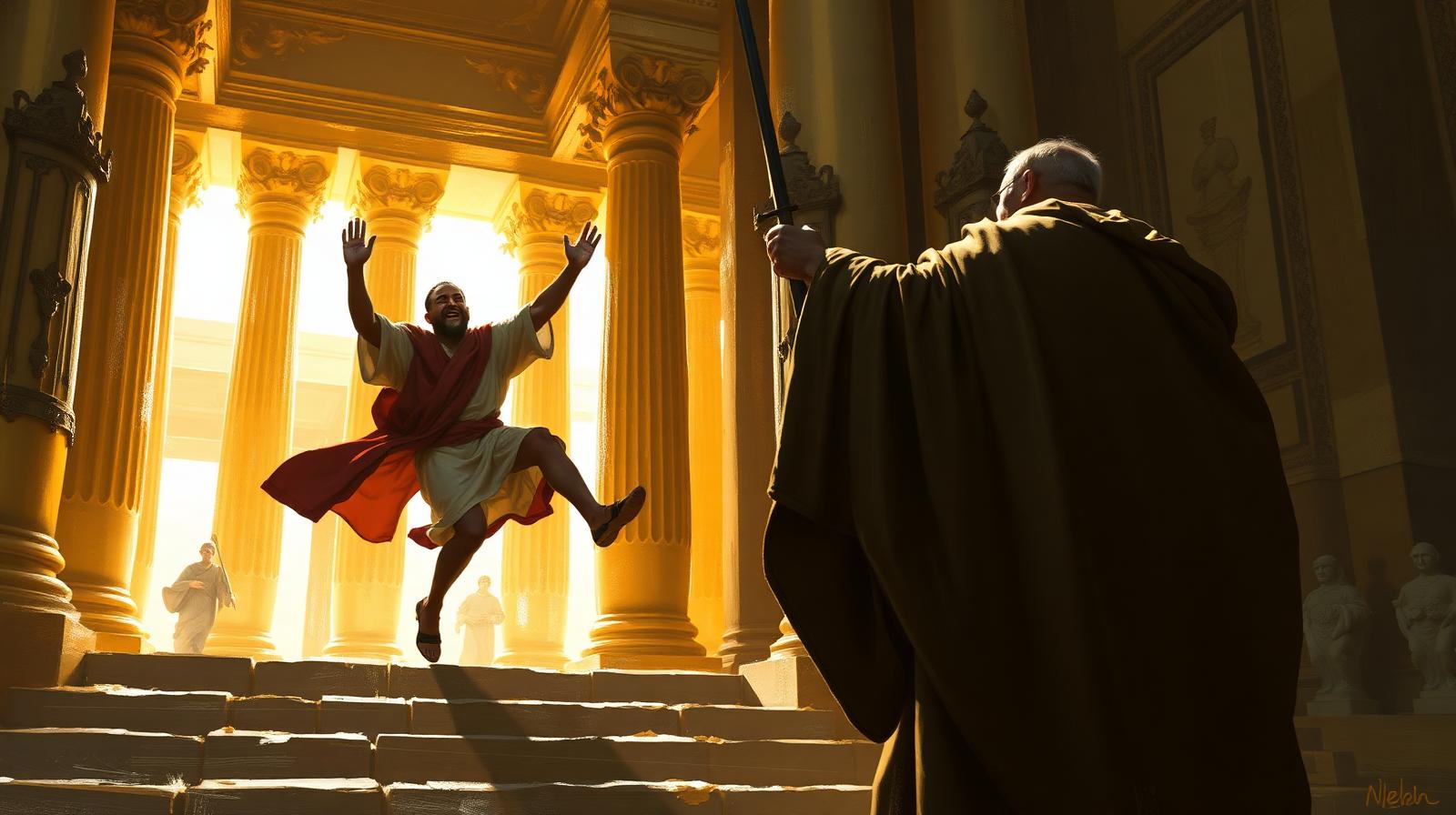
Peter looks straight at him and says the famous words: "Silver or gold I do not have, but what I do have I give you. In the name of Jesus Christ of Nazareth, walk." He takes the man by the hand, and instantly the man's feet and ankles become strong. He jumps up, and goes into the temple courts walking and leaping and praising God — the way you'd expect someone to who has waited his whole life for this.

A crowd rushes over, amazed. Peter seizes the moment for a second sermon: don't stare at us as if we did this by our own power. It was faith in the name of Jesus — the one you handed over to be killed, "the author of life," whom God raised from the dead — that healed this man. Then the call again: repent, turn to God, "that times of refreshing may come from the Lord."

Watch · The Bible Project

LUMO Acts Ep.1 — The Spirit Descends and the Church is Born

What God is communicating

The early church had no money to give the beggar — and gave him something better. The power at work in the apostles is openly named as the power of Jesus, not their own. And notice Peter's instinct: every act of mercy becomes a doorway to point people to the one who actually did it. God restores broken bodies and broken lives, and he wants the credit to land in the right place.

Memory verse
Silver or gold I do not have, but what I do have I give you. In the name of Jesus Christ of Nazareth, walk.

Acts 3:6

Peter and John on Trial

Section 6

Acts 4:1–31

Peter and John on Trial

The healing causes a stir, and the temple authorities are not pleased. They arrest Peter and John and hold them overnight. But the word is spreading — the number of believers grows to about five thousand.

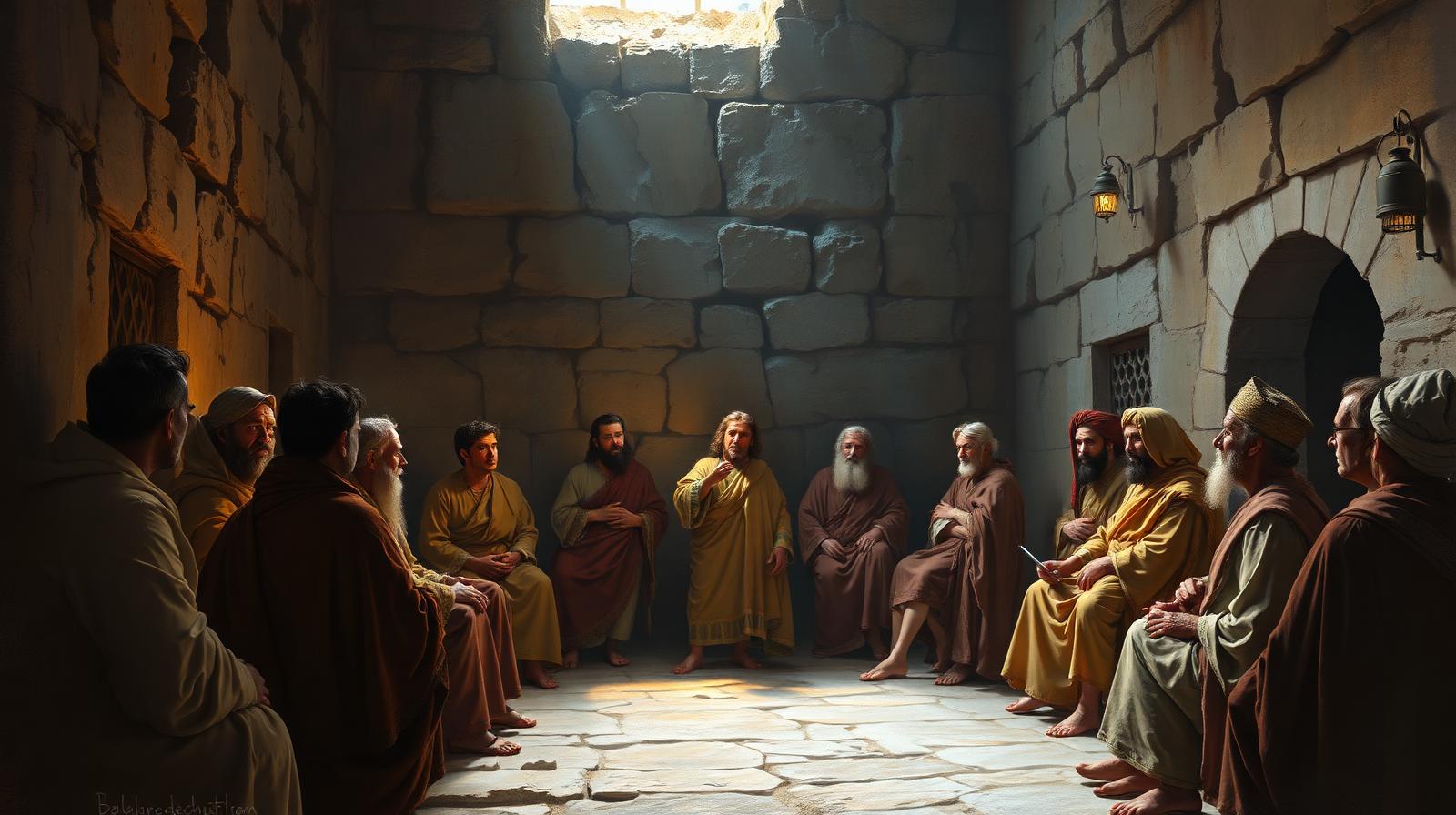
The next day Peter and John stand before the same council that had condemned Jesus. "By what power or what name did you do this?" Peter, filled with the Holy Spirit, answers plainly: by the name of Jesus Christ, the one you crucified, whom God raised. Then he makes one of the boldest claims in the New Testament: "Salvation is found in no one else, for there is no other name under heaven given to mankind by which we must be saved."

The council is stuck. The healed man is standing right there — they can't deny the miracle. They can't punish them without causing a riot, because everyone is praising God. So they fall back on a threat: stop speaking in this name. Peter and John refuse: "We cannot help speaking about what we have seen and heard."

Released, they go back to their friends and pray — not for safety, but for boldness. And the place where they are meeting is shaken, and they are all filled with the Spirit again, and they keep speaking the word of God with courage.

Watch · The Bible Project

LUMO Acts Ep.1 — The Spirit Descends and the Church is Born

What God is communicating

Threatened by the most powerful religious body in their world, two uneducated fishermen don't back down — because they're not relying on themselves. And when they pray, they don't ask God to remove the danger; they ask for the courage to keep going in it. The early church's response to opposition was not retreat but boldness, and God answered.

Memory verse
Salvation is found in no one else, for there is no other name under heaven given to mankind by which we must be saved.

Acts 4:12

Ananias and Sapphira

Section 7

Acts 4:32–5:11

Ananias and Sapphira

Luke gives another beautiful picture of the early church: the believers were "one in heart and mind." No one claimed their possessions were their own; they shared everything. From time to time people sold land or houses and laid the money at the apostles' feet, to be given to anyone in need. One man, a Levite from Cyprus named Joseph, is so encouraging the apostles nickname him Barnabas — "son of encouragement." (Remember him; he matters later.)

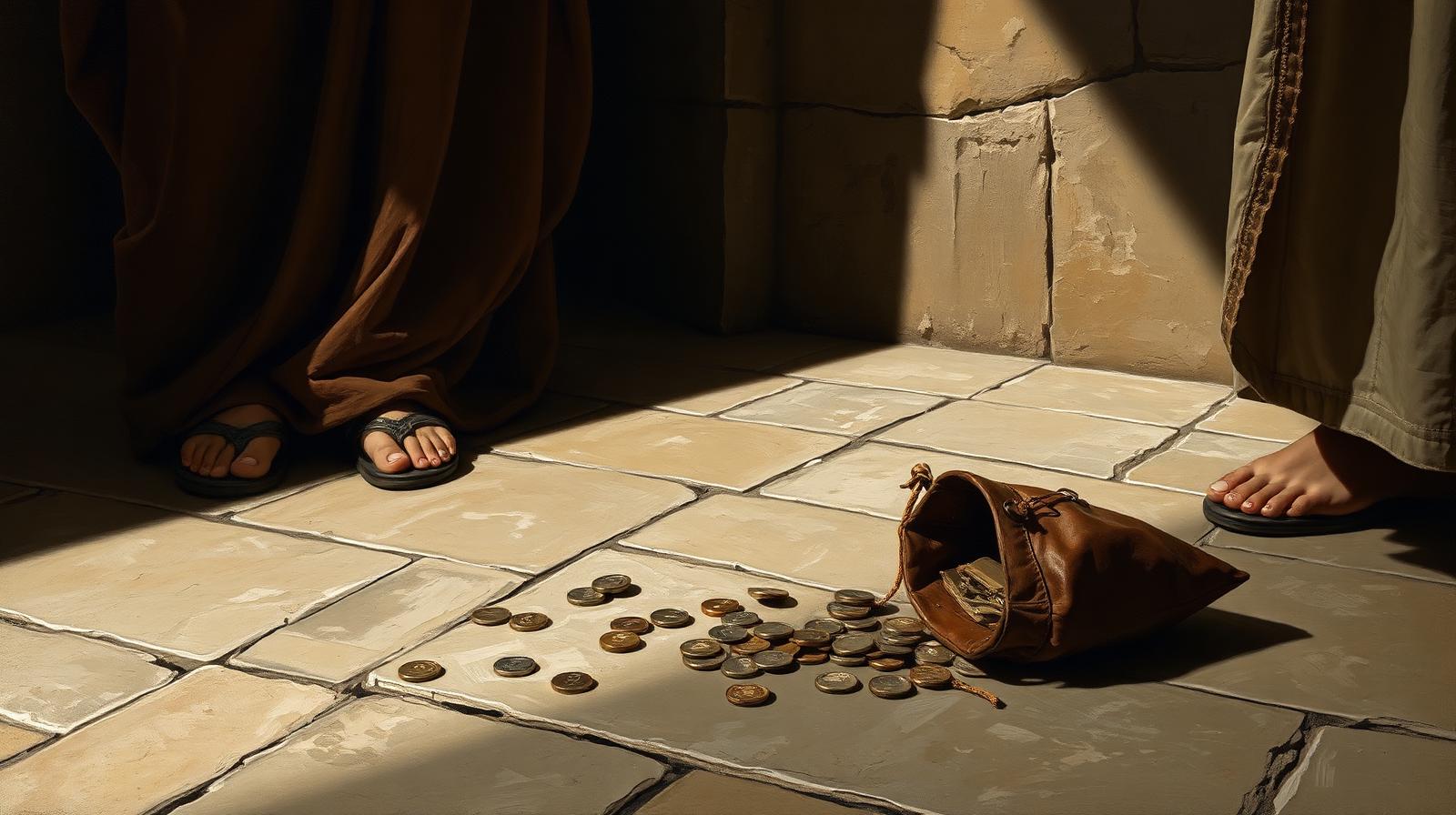
Then comes a dark turn. A couple named Ananias and Sapphira sell a piece of property. They keep back part of the money for themselves — which is completely their right — but they lay the rest at the apostles' feet while claiming it is the whole amount. They want the reputation of total generosity without the cost of it.

Peter confronts Ananias: the land was yours, the money was yours; you didn't have to give any of it. "You have not lied to men but to God." Ananias falls down dead. Three hours later Sapphira comes in, not knowing what happened, and repeats the same lie. She falls dead too. "Great fear seized the whole church."

Watch · The Bible Project

LUMO Acts Ep.1 — The Spirit Descends and the Church is Born

What God is communicating

This is a hard, sobering story, and it's meant to be. The sin wasn't keeping their own money — it was the lie, the performance of holiness they didn't have. In a community built on radical honesty and trust, hypocrisy is poison. God took the integrity of his young church seriously because pretending to be generous, or holy, while quietly serving yourself, corrodes everything from the inside. The early church was real, or it was nothing.

Memory verse
You have not lied just to human beings but to God.

Acts 5:4

The Apostles Arrested and Freed

Section 8

Acts 5:12–42

The Apostles Arrested and Freed

The apostles keep performing signs and wonders, and the church keeps growing — so much so that people carry the sick into the streets hoping even Peter's shadow might fall on them. More and more men and women believe.

The high priest and the Sadducees, "filled with jealousy," arrest the apostles and throw them in the public jail. But during the night an angel of the Lord opens the doors, leads them out, and tells them: go back to the temple and keep preaching. So at daybreak they're right back at it. The authorities, baffled to find the jail empty and locked, have them brought in again — carefully, because the crowd might stone the guards.

"We gave you strict orders not to teach in this name," the high priest says. Peter answers for them all: "We must obey God rather than human beings." The council is furious enough to want them dead. But a respected Pharisee named Gamaliel stands up with a wise warning: leave them alone. If this movement is merely human, it will fail on its own. "But if it is from God, you will not be able to stop these men; you will only find yourselves fighting against God."

They flog the apostles and release them. And the apostles leave "rejoicing because they had been counted worthy of suffering disgrace for the Name."

Watch · The Bible Project

LUMO Acts Ep.1 — The Spirit Descends and the Church is Born

What God is communicating

There is a line every believer eventually meets: the point where human authority demands something God forbids. The apostles drew it clearly — "we must obey God rather than human beings" — and paid for it with their backs. Yet they walked away rejoicing, because suffering for Jesus felt to them like an honour, not a defeat. And Gamaliel's warning still stands: you cannot stop what God is doing.

Memory verse
We must obey God rather than human beings!

Acts 5:29

Stephen — The First Martyr

Section 9

Acts 6:1–7:60

Stephen — The First Martyr

The church is growing so fast it hits a practical problem: the Greek-speaking widows are being overlooked in the daily food distribution. Rather than ignore it, the apostles tell the community to choose seven trustworthy, Spirit-filled men to handle it, so the apostles can stay focused on prayer and the word. One of the seven is Stephen, "a man full of faith and of the Holy Spirit."

Stephen does more than wait tables; he performs great signs and debates so powerfully that his opponents can't win against him. So they do what people did to Jesus: they bribe false witnesses and drag him before the Sanhedrin, accusing him of speaking against the temple and the law.

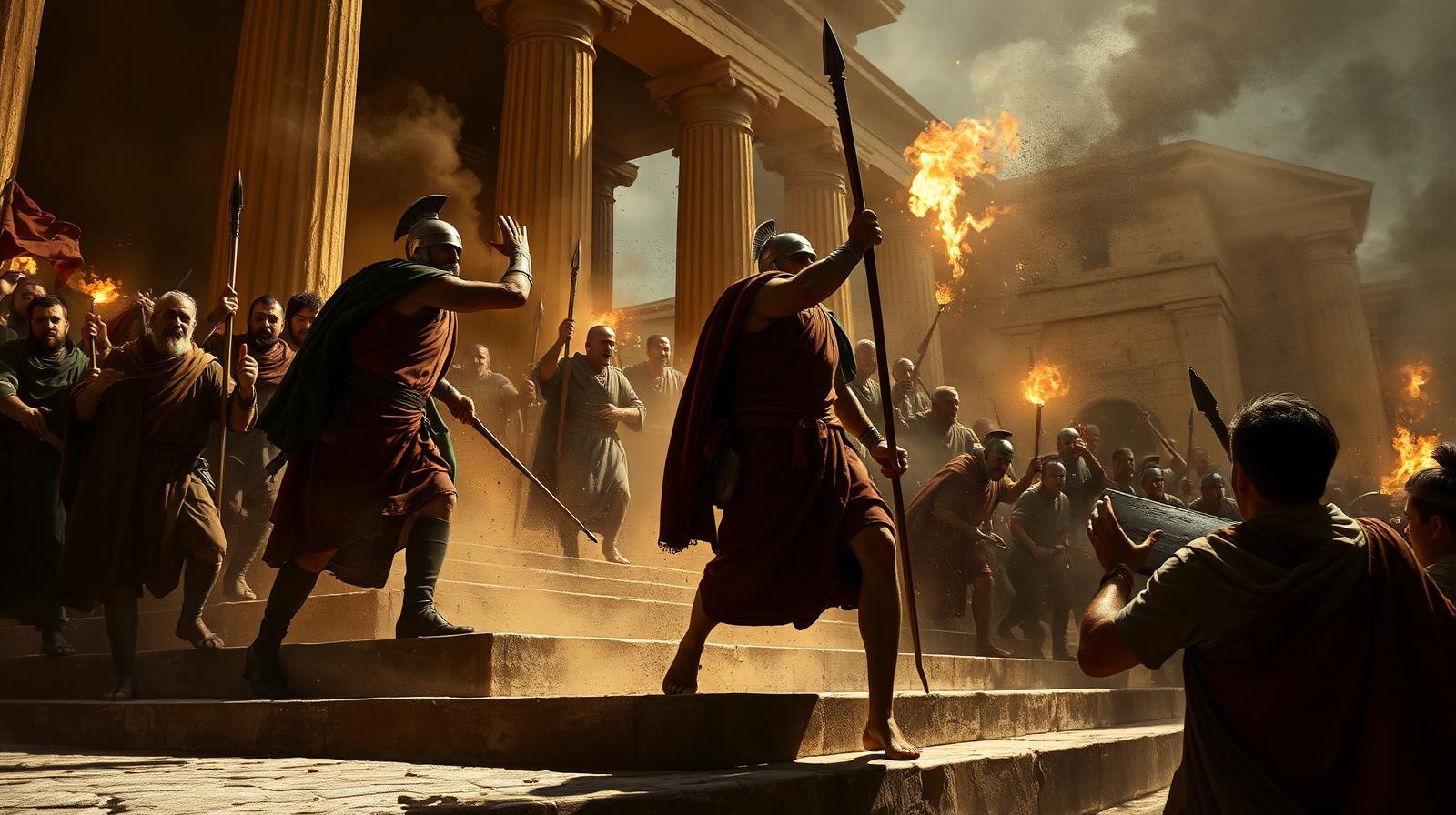
Given the chance to defend himself, Stephen instead delivers the longest speech in Acts — a sweeping retelling of Israel's whole story, from Abraham to Moses to Solomon's temple. His point lands like a hammer at the end: at every stage, God's people resisted God's messengers, and now "you have betrayed and murdered" the Righteous One himself.

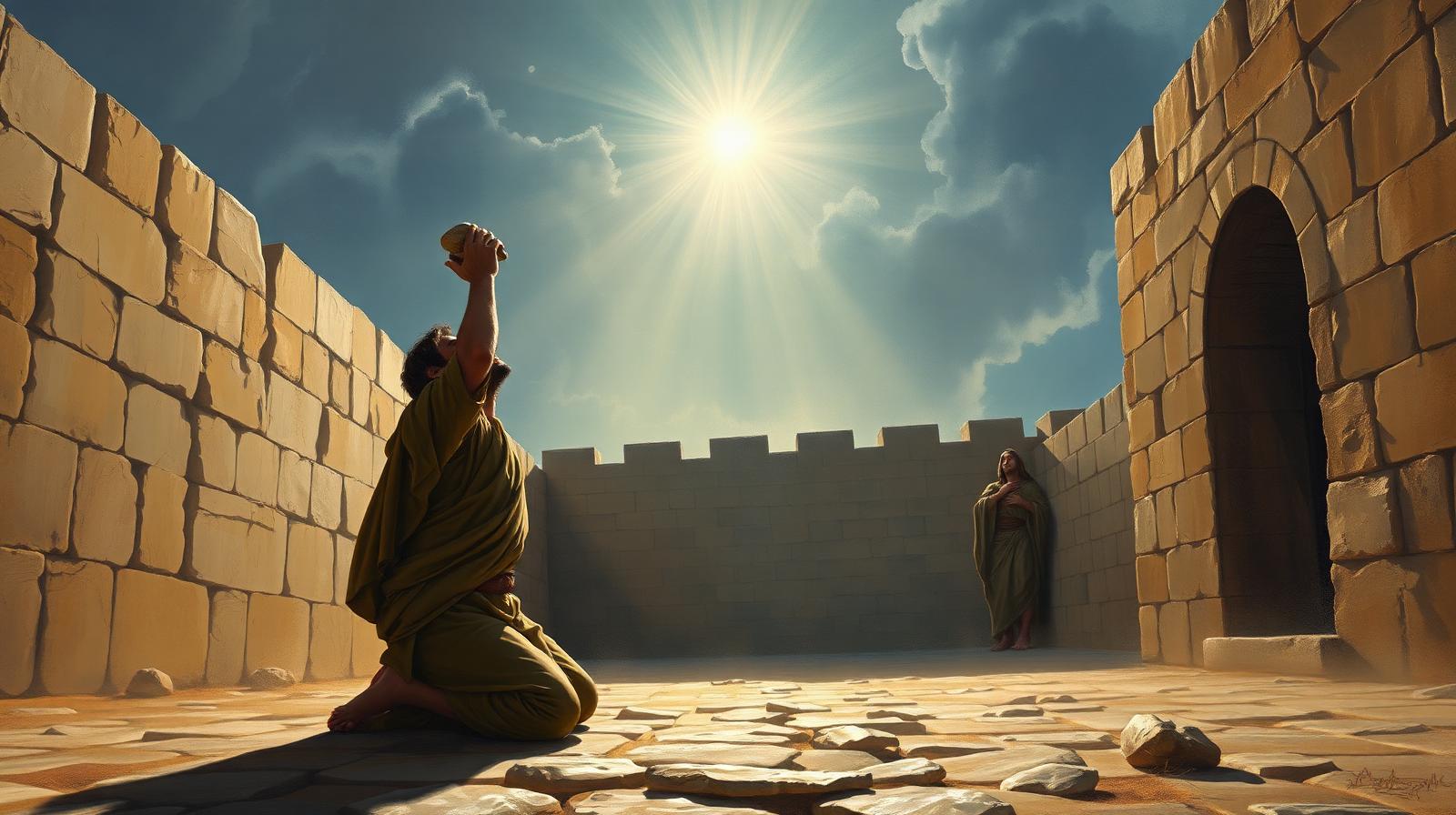
The council is enraged. But Stephen, full of the Spirit, looks up and says he sees heaven open and Jesus standing at God's right hand. They cover their ears, rush him, drag him out of the city, and stone him. As he dies, he echoes his Lord: "Lord Jesus, receive my spirit," and then, "Lord, do not hold this sin against them." And standing there, guarding the coats of the killers, approving of the death, is a young man named Saul.

Watch · The Bible Project

LUMO Acts Ep.1 — The Spirit Descends and the Church is Born

What God is communicating

Stephen's death is the church's first martyrdom, and it is shaped exactly like Jesus' own — false witnesses, a furious council, and dying words of forgiveness for his killers. The gospel doesn't make its followers safe; it makes them like Christ, even unto death. And watch the last detail: the worst enemy the early church will ever face is introduced holding the coats. God is already writing a redemption story no one in that crowd could imagine.

Memory verse
Then he fell on his knees and cried out, "Lord, do not hold this sin against them." When he had said this, he fell asleep.

Acts 7:60

Philip: Samaria and the Ethiopian

Section 10

Acts 8:1–40

Philip: Samaria and the Ethiopian

Stephen's death sets off a wave of persecution, led by Saul, who goes house to house dragging believers off to prison. The church in Jerusalem is scattered — and that turns out to be exactly how the gospel gets out. "Those who had been scattered preached the word wherever they went." Persecution becomes a delivery system.

Philip — another of the seven — goes down to a city in Samaria. Remember: Jews and Samaritans despised each other. This is the gospel crossing its first major ethnic line. Philip preaches Christ, drives out evil spirits, heals the paralysed and lame, and "there was great joy in that city." (A local sorcerer named Simon believes too, then tries to buy the power of the Spirit, and is sharply rebuked — a reminder that God's gifts are never for sale.)

Then an angel sends Philip to a desert road, where he meets an Ethiopian official — the treasurer of the queen of Ethiopia — riding home in his chariot, reading the prophet Isaiah aloud. The Spirit tells Philip to run alongside. "Do you understand what you're reading?" "How can I, unless someone explains it?" The man is reading Isaiah 53 — the suffering servant led like a lamb to the slaughter. Philip, beginning right there, tells him the good news about Jesus. They come to some water; the official asks, "What can stand in the way of my being baptised?" Nothing can. Philip baptises him, and he goes on his way rejoicing.

Watch · The Bible Project

LUMO Acts Ep.2 — The Gospel Breaks Boundaries

What God is communicating

The thing meant to crush the church — violent persecution — is the very thing God uses to spread it past Jerusalem. And the gospel immediately starts reaching the people Jewish society had written off: a hated Samaritan city, and a foreigner who was both a different race and (as a eunuch) barred from full temple worship. To both, the answer is the same: there is nothing standing in the way. The circle keeps widening on purpose.

Memory verse
Then Philip began with that very passage of Scripture and told him the good news about Jesus.

Acts 8:35

The Conversion of Saul

Section 11

Acts 9:1–31

The Conversion of Saul

Saul is still "breathing out murderous threats." He gets letters of authority to go to Damascus, hunt down believers, and drag them back to Jerusalem in chains. He is the most dangerous man in this book.

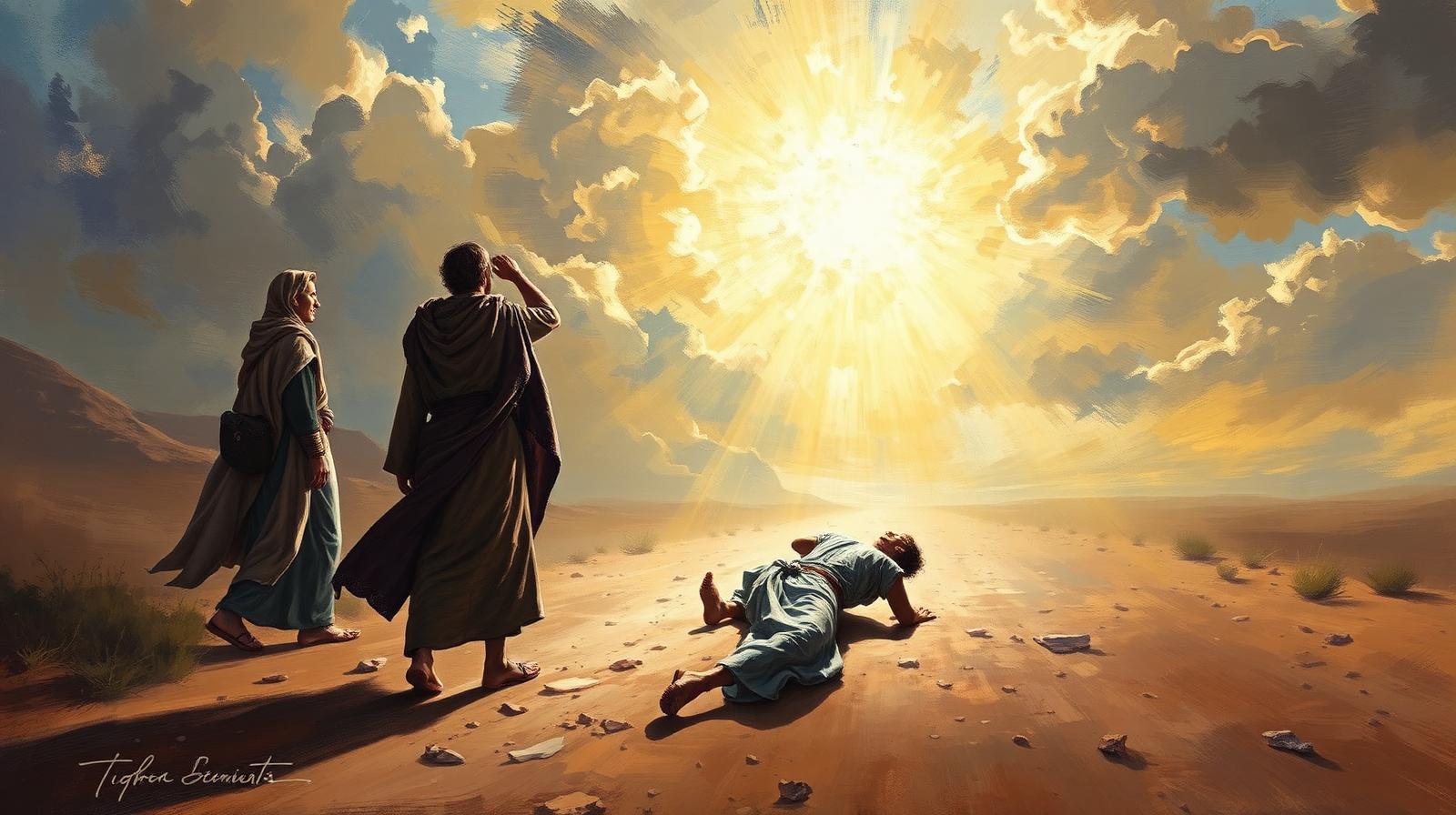
On the road, a light from heaven flashes around him. He falls to the ground and hears a voice: "Saul, Saul, why do you persecute me?" "Who are you, Lord?" "I am Jesus, whom you are persecuting." (Note what Jesus says: persecuting the church is persecuting him.) Saul gets up blind, and has to be led by the hand into the city he came to terrorise.

Meanwhile God speaks to a believer in Damascus named Ananias — go and lay hands on Saul. Ananias objects, reasonably: this man came here to arrest us. But God answers: "Go! This man is my chosen instrument to proclaim my name to the Gentiles and their kings and to the people of Israel." Ananias obeys, calls him "Brother Saul," and Saul's sight returns. He is baptised at once.

The transformation is total. The man who came to destroy the church immediately starts preaching in the synagogues that Jesus is the Son of God. People are stunned — isn't this the persecutor? His preaching gets so dangerous to the authorities that the believers have to lower him over the city wall in a basket to save his life. The hunter is now the hunted.

Watch · The Bible Project

LUMO Acts Ep.2 — The Gospel Breaks Boundaries

What God is communicating

No one is too far gone. The church's worst enemy becomes its greatest missionary — not because he searched for God, but because God came and found him on the road. Grace here is not a reward for the seeking; it's an ambush of mercy on someone running the wrong way. If God can turn Saul, no one in your life is beyond his reach.

Memory verse
But the Lord said to Ananias, "Go! This man is my chosen instrument to proclaim my name to the Gentiles and their kings and to the people of Israel."

Acts 9:15

Peter and the Gentiles (Cornelius)

Section 12

Acts 9:32–11:18

Peter and the Gentiles (Cornelius)

While Saul disappears for a while, the camera returns to Peter, who heals a paralysed man named Aeneas and raises a beloved disciple named Tabitha (Dorcas) from death in Joppa. But the big story here is a wall coming down.

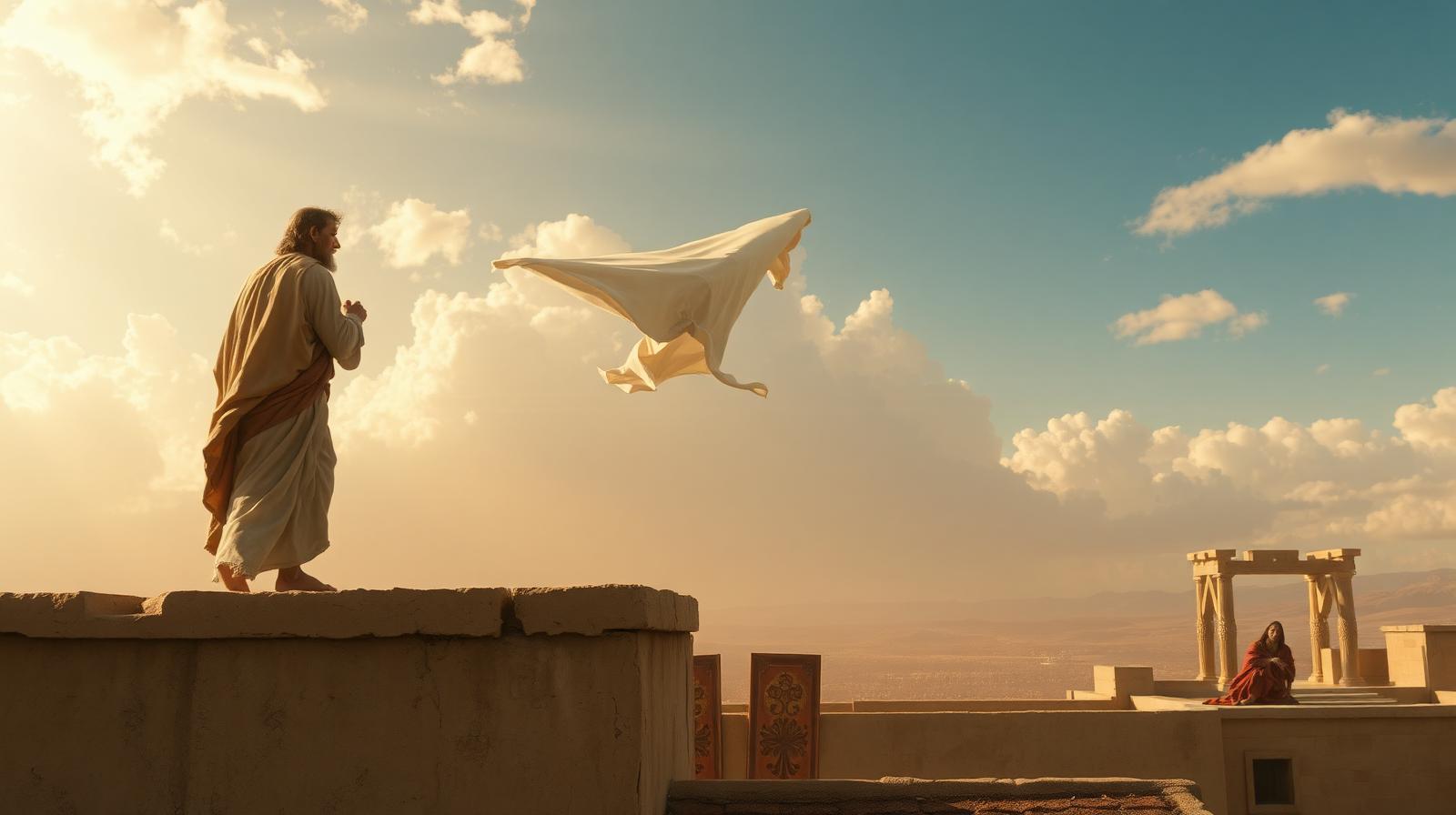
In Caesarea lives Cornelius — a Roman centurion, a Gentile, an officer of the occupying army, yet a man who prays and gives generously. An angel tells him to send for Peter. Meanwhile Peter, praying on a rooftop, falls into a trance and sees a sheet lowered from heaven full of animals Jews were forbidden to eat. A voice says, "Kill and eat." Peter refuses — "I have never eaten anything impure." The voice replies: "Do not call anything impure that God has made clean." Three times.

While Peter is puzzling over it, Cornelius's men arrive. Peter goes with them — itself scandalous, a Jew entering a Gentile's home — and finally understands the vision wasn't really about food. "I now realise how true it is that God does not show favouritism, but accepts from every nation the one who fears him." As Peter preaches, the Holy Spirit falls on the whole Gentile household, just as at Pentecost. Peter baptises them. When the Jerusalem believers object, Peter tells the whole story, and they fall silent, then praise God: "So then, even to Gentiles God has granted repentance that leads to life."

Watch · The Bible Project

LUMO Acts Ep.2 — The Gospel Breaks Boundaries

What God is communicating

This is one of the most important turning points in the whole Bible. God personally dismantles the deepest dividing wall of the ancient world — Jew and Gentile, clean and unclean — and he does it by changing Peter's heart through a vision and a knock at the door. "God does not show favouritism." The good news is not for one kind of person who keeps the right rules; it's for everyone, everywhere, who turns to him.

Memory verse
I now realise how true it is that God does not show favouritism, but accepts from every nation the one who fears him and does what is right.

Acts 10:34–35

Antioch, and Peter's Rescue

Section 13

Acts 11:19–12:25

Antioch, and Peter's Rescue

The scattered believers reach Antioch — a huge, cosmopolitan city far to the north — and for the first time begin telling Gentiles, not just Jews, about Jesus. A great number believe. The Jerusalem church sends Barnabas to check on it; thrilled by what he sees, he goes and finds Saul and brings him to help teach for a year. And it's here, in Antioch, that the followers of Jesus are first called Christians.

Back in Jerusalem, King Herod launches a violent attack on the church. He has James, the brother of John — one of Jesus' closest friends — put to death by the sword. Seeing it pleases the crowd, he arrests Peter too, planning a public execution after Passover, guarding him with sixteen soldiers.

The night before the trial, Peter is sleeping in chains between two soldiers when an angel wakes him, the chains fall off, and door after door opens until he's standing free in the street. He goes to a house where believers are praying — praying, ironically, for him — and a servant girl named Rhoda is so overjoyed to hear his voice that she leaves him standing at the gate while she runs to tell everyone. They don't believe her. Peter keeps knocking. Herod, meanwhile, accepts a crowd's praise as if he were a god, and dies under God's judgement. "But the word of God continued to spread and flourish."

Watch · The Bible Project

LUMO Acts Ep.2 — The Gospel Breaks Boundaries

What God is communicating

Two kinds of power are on display, side by side. Herod has soldiers, prisons, and the power to kill — and he ends up dead and forgotten. The praying church looks powerless — they can't even believe their own answered prayer is standing at the door — yet the word of God "continued to spread and flourish." Empires rise and fall; the gospel keeps moving. And it's in this ordinary, mixed, far-off city that the church first gets the name the world still uses.

Memory verse
The disciples were called Christians first at Antioch.

Acts 11:26

The First Missionary Journey

Section 14

Acts 13:1–14:28

The First Missionary Journey

In Antioch, while the church is worshipping and fasting, the Holy Spirit says: "Set apart for me Barnabas and Saul for the work to which I have called them." So the church lays hands on them and sends them off — and the great missionary era of Acts begins. (Somewhere in here, Saul starts going by his Roman name, Paul.)

They sail to Cyprus, then into what is now Turkey, preaching first in the synagogues. The pattern repeats from town to town: Paul preaches Jesus as the fulfilment of the Scriptures; some Jews and many Gentiles believe; others stir up opposition and run them out. In Antioch of Pisidia, when the synagogue rejects the message, Paul makes a decisive turn, quoting Isaiah: "I have made you a light for the Gentiles, that you may bring salvation to the ends of the earth." The Gentiles are overjoyed.

It is not a comfortable trip. In Lystra, after Paul heals a man unable to walk, the crowd decides he and Barnabas are gods and tries to sacrifice to them — and the two have to beg them to stop. Then, days later, the same crowd is turned, and they stone Paul and drag him out of the city, thinking he's dead. He gets up and goes back in. On their way home, they revisit every church, "strengthening the disciples and encouraging them to remain true to the faith," and warning them plainly: "We must go through many hardships to enter the kingdom of God."

Watch · The Bible Project

LUMO Acts Ep.2 — The Gospel Breaks Boundaries

What God is communicating

The mission of the church is not a human strategy — it begins with the Spirit saying "set apart… for me." And it is gloriously messy: belief and riots, worship and stoning, sometimes in the same town within a week. Paul's deliberate turn to the Gentiles fulfils ancient prophecy and pushes the gospel toward the whole world. The honesty is bracing: following Jesus into mission means hardship, and the apostles never pretended otherwise.

Memory verse
For this is what the Lord has commanded us: "I have made you a light for the Gentiles, that you may bring salvation to the ends of the earth."

Acts 13:47

The Jerusalem Council

Section 15

Acts 15:1–35

The Jerusalem Council

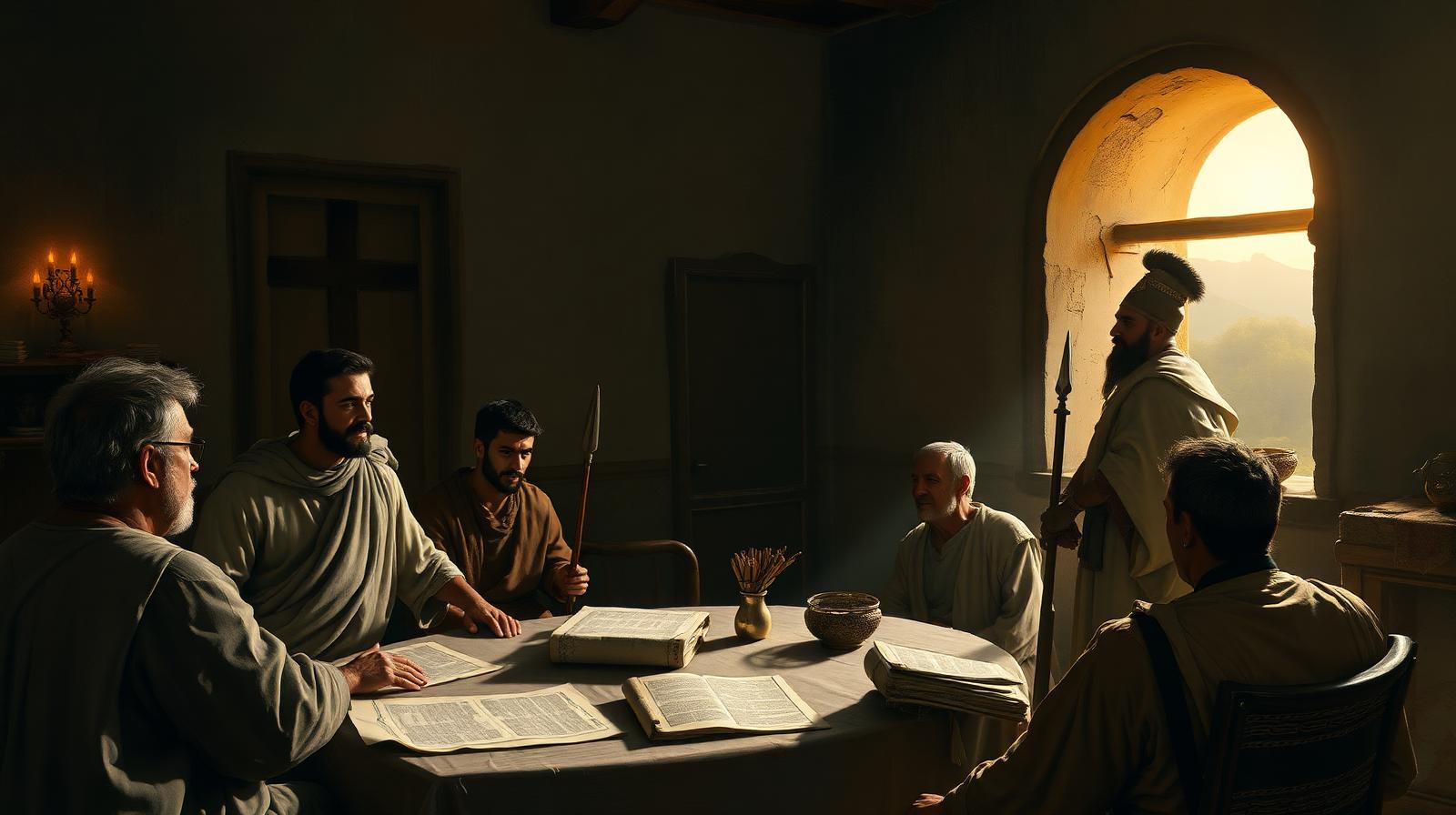
Success creates a crisis. As more and more Gentiles come to faith, some Jewish believers insist they must be circumcised and keep the law of Moses to be truly saved. This is the most important theological question the young church will face: is the gospel grace, or grace plus rule-keeping? Paul and Barnabas argue sharply against the new requirement, and the church sends them to Jerusalem to settle it.

The apostles and elders gather. Peter stands and reminds them of Cornelius: God gave the Holy Spirit to the Gentiles "just as he did to us," purifying their hearts by faith. "Why do you try to test God by putting on the necks of Gentiles a yoke that neither we nor our ancestors have been able to bear?" Then his summary, pure gospel: "We believe it is through the grace of our Lord Jesus that we are saved, just as they are." Paul and Barnabas tell the stories of what God did among the Gentiles. James, leading the Jerusalem church, agrees and proposes they not burden the Gentiles — just ask them to avoid a few things that would needlessly offend Jewish believers.

They write a gracious letter and send it out. The verdict is unanimous and historic: you do not have to become a Jew to follow Jesus. Salvation is by grace, the same for everyone.

Watch · The Bible Project

LUMO Acts Ep.3 — Mission and Resistance

What God is communicating

This is the hinge on which the whole future of Christianity turns. The church could have become one more rule-bound sect; instead it held the line on grace. You are not saved by your religious performance, your background, or your ability to keep a code — you are saved through the grace of the Lord Jesus, full stop, the same way everyone else is. And notice how they decided: not by the loudest voice, but by listening to what God had already done, weighing Scripture, and seeking unity.

Memory verse
We believe it is through the grace of our Lord Jesus that we are saved, just as they are.

Acts 15:11

Into Europe: Lydia and the Jailer

Section 16

Acts 15:36–16:40

Into Europe: Lydia and the Jailer

Paul and Barnabas have a falling-out — sharp enough that they part ways — over whether to give John Mark a second chance after he'd abandoned them earlier. Barnabas (the encourager) takes Mark; Paul takes Silas. Even here, God uses the disagreement: now there are two mission teams instead of one. Paul also picks up a young disciple named Timothy, who becomes like a son to him.

Then a night vision: a man of Macedonia pleading, "Come over and help us." Paul takes it as God's call, and for the first time the gospel crosses into Europe. In Philippi, by a river, they meet Lydia, a businesswoman dealing in purple cloth. "The Lord opened her heart," she believes, and her whole household is baptised — the first convert on the continent.

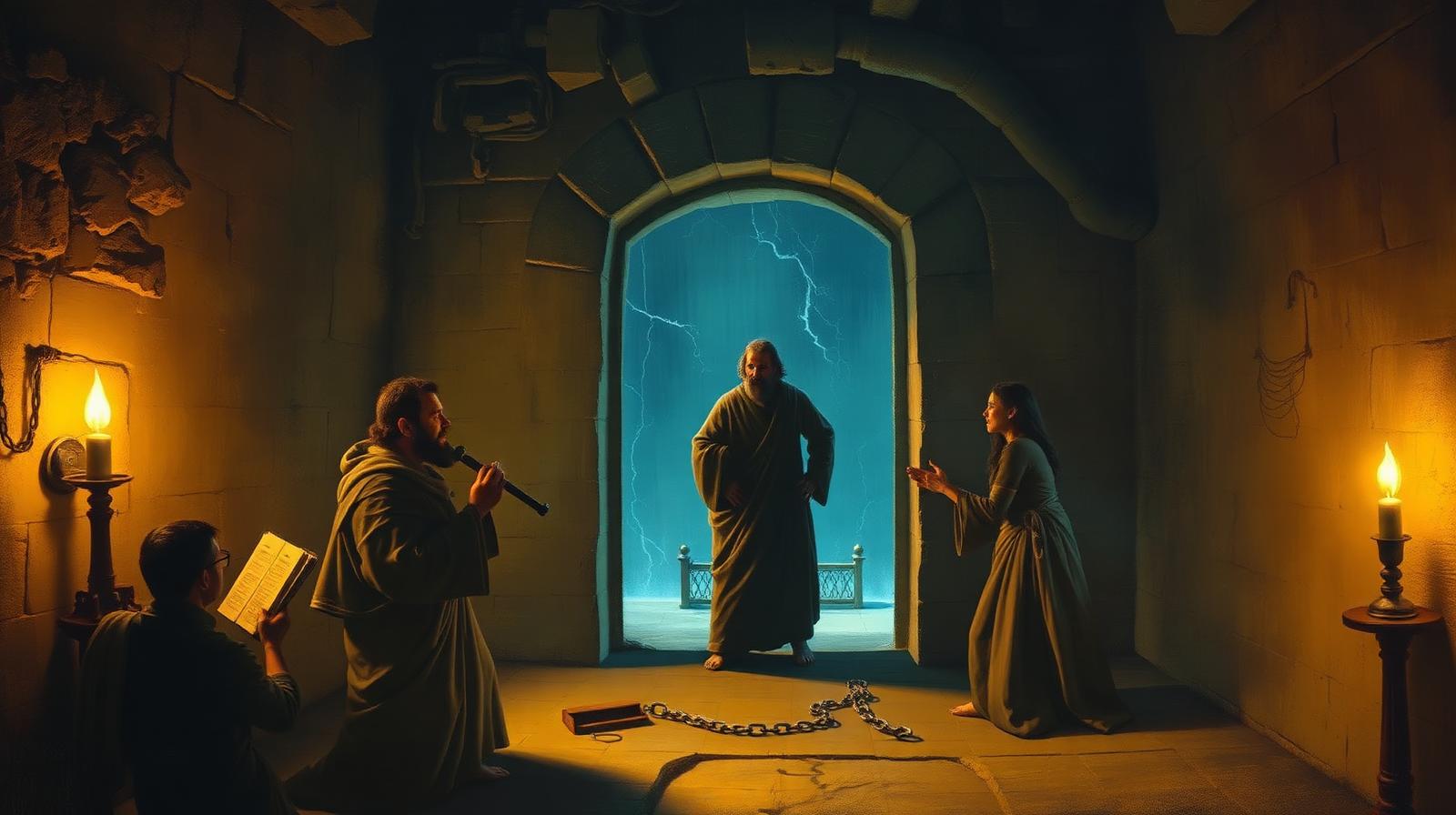
Then trouble. Paul frees a slave girl from a spirit that her owners were exploiting for profit; furious at their lost income, they have Paul and Silas stripped, beaten, and thrown in prison. At midnight, bruised and chained, the two are singing hymns. An earthquake shakes the prison, the doors fly open, the chains come loose. The jailer, assuming everyone has escaped, draws his sword to kill himself — but Paul shouts, "Don't harm yourself! We're all here." Trembling, the jailer asks the question of the whole book: "What must I do to be saved?" The answer: "Believe in the Lord Jesus, and you will be saved — you and your household." That night the jailer washes their wounds, and they baptise his whole family.

Watch · The Bible Project

LUMO Acts Ep.3 — Mission and Resistance

What God is communicating

Watch who the gospel reaches first in Europe: a wealthy businesswoman and a working-class prison guard — opposite ends of society, same simple door in. "Believe in the Lord Jesus, and you will be saved." And watch Paul and Silas worship in a dungeon at midnight; their joy doesn't depend on their circumstances, which is its own kind of sermon. Even a bitter split between two good men becomes, in God's hands, more gospel going further.

Memory verse
Believe in the Lord Jesus, and you will be saved — you and your household.

Acts 16:31

Thessalonica, Berea, and Athens

Section 17

Acts 17:1–34

Thessalonica, Berea, and Athens

Three cities, three very different responses. In Thessalonica, Paul preaches in the synagogue and some believe — but jealous opponents start a riot, dragging believers before the city officials and accusing them of "defying Caesar's decrees, saying that there is another king, one called Jesus." Paul and Silas slip away by night.

In Berea, Luke pauses to praise the locals: they were "of more noble character," because they "received the message with great eagerness and examined the Scriptures every day to see if what Paul said was true." That's the model — open-hearted and careful, testing the teaching against the text. Many believe.

Then Athens — the intellectual capital of the world, a city "full of idols." Paul is invited to speak at the Areopagus, the council of philosophers. He doesn't start by quoting Scripture they don't accept; he starts where they are: "I see that in every way you are very religious. I even found an altar with this inscription: TO AN UNKNOWN GOD. So you are ignorant of the very thing you worship — and this is what I am going to proclaim to you." He tells them about the God who made everything, in whom "we live and move and have our being," who now commands everyone to repent because he has set a day of judgement and proved it by raising a man from the dead. At the mention of resurrection, some sneer, some want to hear more, and a few believe.

Watch · The Bible Project

LUMO Acts Ep.3 — Mission and Resistance

What God is communicating

The gospel meets every kind of person on their own ground. The Bereans show us faith that investigates rather than swallows — checking everything against Scripture is honoured here, not discouraged. And in Athens, Paul shows how to speak to people far outside the faith: respectfully, starting with what they already sense is true, then pointing to the God they're already reaching for without knowing his name. Not everyone believed — and Paul kept going anyway.

Memory verse
"For in him we live and move and have our being." As some of your own poets have said, "We are his offspring."

Acts 17:28

Corinth

Section 18

Acts 18:1–22

Corinth

Paul comes to Corinth — a wealthy, rough port city — and meets a couple who will become lifelong partners in the work: Aquila and Priscilla, tentmakers like Paul, who had been expelled from Rome. He works his trade alongside them and reasons in the synagogue every Sabbath.

When opposition hardens, Paul has a vision at night, and the Lord says something he badly needed to hear: "Do not be afraid; keep on speaking, do not be silent. For I am with you, and no one is going to attack you to harm you, because I have many people in this city." So Paul stays a year and a half — far longer than his usual quick visits — teaching the word of God. When his Jewish opponents finally drag him before the Roman governor Gallio, Gallio throws the case out as an internal religious dispute, effectively giving Christianity legal breathing room.

Then Paul sails for home, pausing at Ephesus (promising to return), and reports back to his sending church.

Watch · The Bible Project

LUMO Acts Ep.3 — Mission and Resistance

What God is communicating

Even Paul gets afraid and weary. And God's encouragement to him is striking: "I have many people in this city" — people who don't believe yet, but whom God already counts as his. The mission isn't Paul drumming up converts by force of personality; it's Paul joining what God is already doing. Sometimes faithfulness looks like staying put a year and a half in a hard place, with the quiet promise: I am with you.

Memory verse
Do not be afraid; keep on speaking, do not be silent. For I am with you, and no one is going to attack you to harm you, because I have many people in this city.

Acts 18:9–10

The Third Journey: Ephesus

Section 19

Acts 18:23–19:41

The Third Journey: Ephesus

Paul settles in Ephesus for over two years, and it becomes one of the great centres of the early church. He teaches daily, and "all the Jews and Greeks who lived in the province of Asia heard the word of the Lord." God does extraordinary miracles through him — even cloths he had touched bring healing.

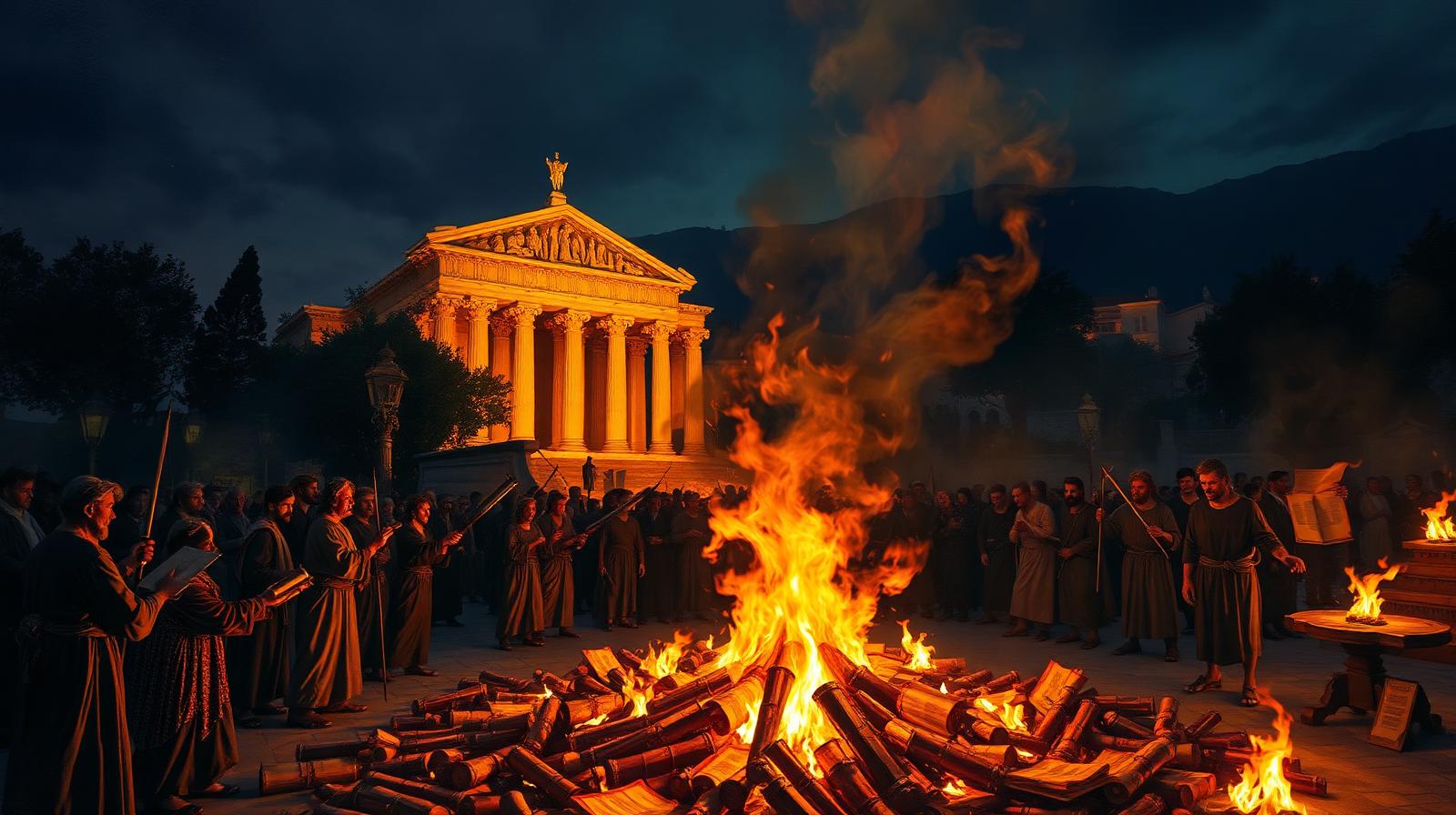
The power of the gospel becomes visible in dramatic ways. Some try to use Jesus' name like a magic spell and get badly humiliated by an evil spirit. The result is a city-wide reckoning: many believers who had practised sorcery bring out their scrolls and burn them publicly — a bonfire worth a fortune. "In this way the word of the Lord spread widely and grew in power."

But Ephesus runs on the worship of the goddess Artemis, and that's big business. A silversmith named Demetrius, who makes shrines, realises Paul's preaching is hurting sales — "he says gods made by human hands are no gods at all." He rallies the craftsmen, and soon the whole city is in an uproar, chanting "Great is Artemis of the Ephesians!" for two hours straight in the great theatre. It nearly becomes a deadly riot before the city clerk calms the crowd and sends them home.

Watch · The Bible Project

LUMO Acts Ep.3 — Mission and Resistance

What God is communicating

When the gospel really takes hold, it doesn't just add a private belief — it changes what people do with their money, their fears, and their old powers. The Ephesians burned their occult scrolls because Jesus had become more real to them than their magic. And the riot reveals something the book keeps showing: the gospel threatens entrenched interests. Where faith costs people money and power, expect pushback. The word still "spread widely and grew in power."

Memory verse
In this way the word of the Lord spread widely and grew in power.

Acts 19:20

The Farewell at Miletus

Section 20

Acts 20:1–38

The Farewell at Miletus

Paul is now drawn toward Jerusalem, sensing trouble ahead. (Luke quietly slips into "we" here — he's travelling with Paul now.) Along the way, in Troas, Paul preaches so long that a young man named Eutychus falls asleep in a third-floor window, tumbles out, and dies — and Paul goes down, embraces him, and God restores his life. Then they go back upstairs and keep talking until dawn.

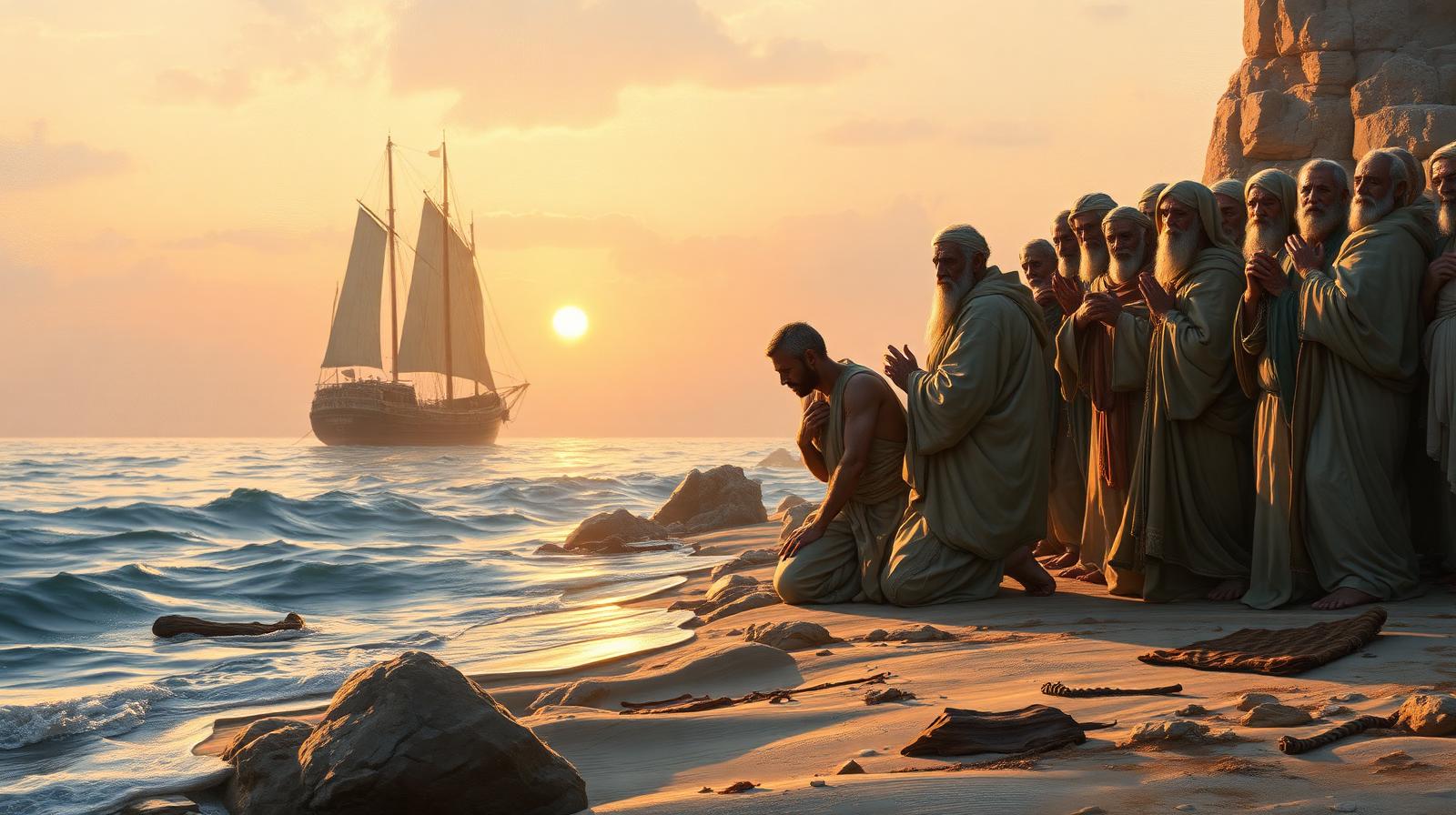
Not wanting to lose time, Paul sails past Ephesus but calls its church elders to meet him at Miletus for a goodbye he knows is final. It's one of the most moving passages in Acts. He reminds them how he served "with great humility and with tears," holding nothing back, teaching publicly and house to house. He tells them the Spirit is warning him that prison and hardship wait in every city — "but I consider my life worth nothing to me; my only aim is to finish the race and complete the task the Lord Jesus has given me." He warns them to guard the flock, because false teachers will come. He reminds them of a saying of Jesus found nowhere else: "It is more blessed to give than to receive." Then they all kneel and pray, and weep, and embrace him, grieved most of all that they will never see his face again. And they walk him to the ship.

Watch · The Bible Project

LUMO Acts Ep.3 — Mission and Resistance

What God is communicating

Here is what a life poured out for Christ actually looks like — not glamorous, but faithful: humility, tears, hard work, honesty about the cost, and a single aim, "to finish the race." Paul walks knowingly toward suffering because finishing well matters more to him than staying safe. And the tearful, hugging goodbye reminds us that the early church was not an institution but a family of people who genuinely loved each other.

Memory verse
I consider my life worth nothing to me; my only aim is to finish the race and complete the task the Lord Jesus has given me — the task of testifying to the good news of God's grace.

Acts 20:24

Arrested in Jerusalem

Section 21

Acts 21:1–23:35

Arrested in Jerusalem

Paul reaches Jerusalem despite repeated warnings from friends who beg him not to go; his answer is, "I am ready not only to be bound, but also to die… for the name of the Lord Jesus." He meets with James and the elders and, to show he still honours Jewish custom, joins some men in a temple purification rite.

It backfires. Some Jews from Asia spot him in the temple, falsely accuse him of bringing Gentiles into the forbidden inner courts, and incite a mob. They drag Paul out and start beating him to death. Roman soldiers rush down from the nearby barracks and rescue him — arresting him as they go. On the steps, Paul asks permission to address the crowd and tells his story: his old life as a persecutor, the light on the Damascus road, his commission to the Gentiles. At that last word the crowd erupts again.

The Romans nearly flog him until Paul reveals he's a Roman citizen — which changes everything. Brought before the Sanhedrin, Paul shrewdly splits the council by raising the resurrection, dividing the Pharisees (who believe in it) from the Sadducees (who don't), and the meeting dissolves into chaos. That night the Lord stands by him: "Take courage! As you have testified about me in Jerusalem, so you must also testify in Rome." When Paul's nephew uncovers a plot of forty men sworn to kill him, the Roman commander sends Paul out under heavy guard by night to Caesarea, to stand trial before the governor.

Watch · The Bible Project

LUMO Acts Ep.4 — Bound Yet Unstoppable

What God is communicating

Doing the right thing doesn't guarantee a smooth outcome — Paul went to Jerusalem in obedience and walked straight into a riot, a near-lynching, and prison. But notice the thread running through the chaos: God keeps Paul alive through a Roman rescue, a citizenship technicality, a divided council, and a teenager who overhears a plot. And in the worst of it, Jesus himself shows up to say, "Take courage… you must testify in Rome." The destination was never in doubt.

Memory verse
The following night the Lord stood near Paul and said, "Take courage! As you have testified about me in Jerusalem, so you must also testify in Rome."

Acts 23:11

On Trial: Felix, Festus, and Agrippa

Section 22

Acts 24:1–26:32

On Trial: Felix, Festus, and Agrippa

Paul now spends two years as a prisoner in Caesarea, moving through a series of trials before the most powerful men in the region — and turning each one into a chance to tell the gospel.

First, Governor Felix. Paul defends himself easily against the trumped-up charges, and Felix, who actually knows quite a bit about "the Way," keeps Paul around — partly hoping for a bribe, partly because his wife wants to hear him. When Paul reasons "about righteousness, self-control and the judgement to come," Felix is afraid and sends him away: "When I find it convenient, I will send for you." He leaves Paul in prison for two years to please the crowd.

Then Festus, the new governor, who wants to do the Jews a favour by sending Paul back to Jerusalem (where the ambush still waits). Paul, exercising his right as a Roman citizen, says the words that set his course: "I appeal to Caesar!" To Caesar he will go.

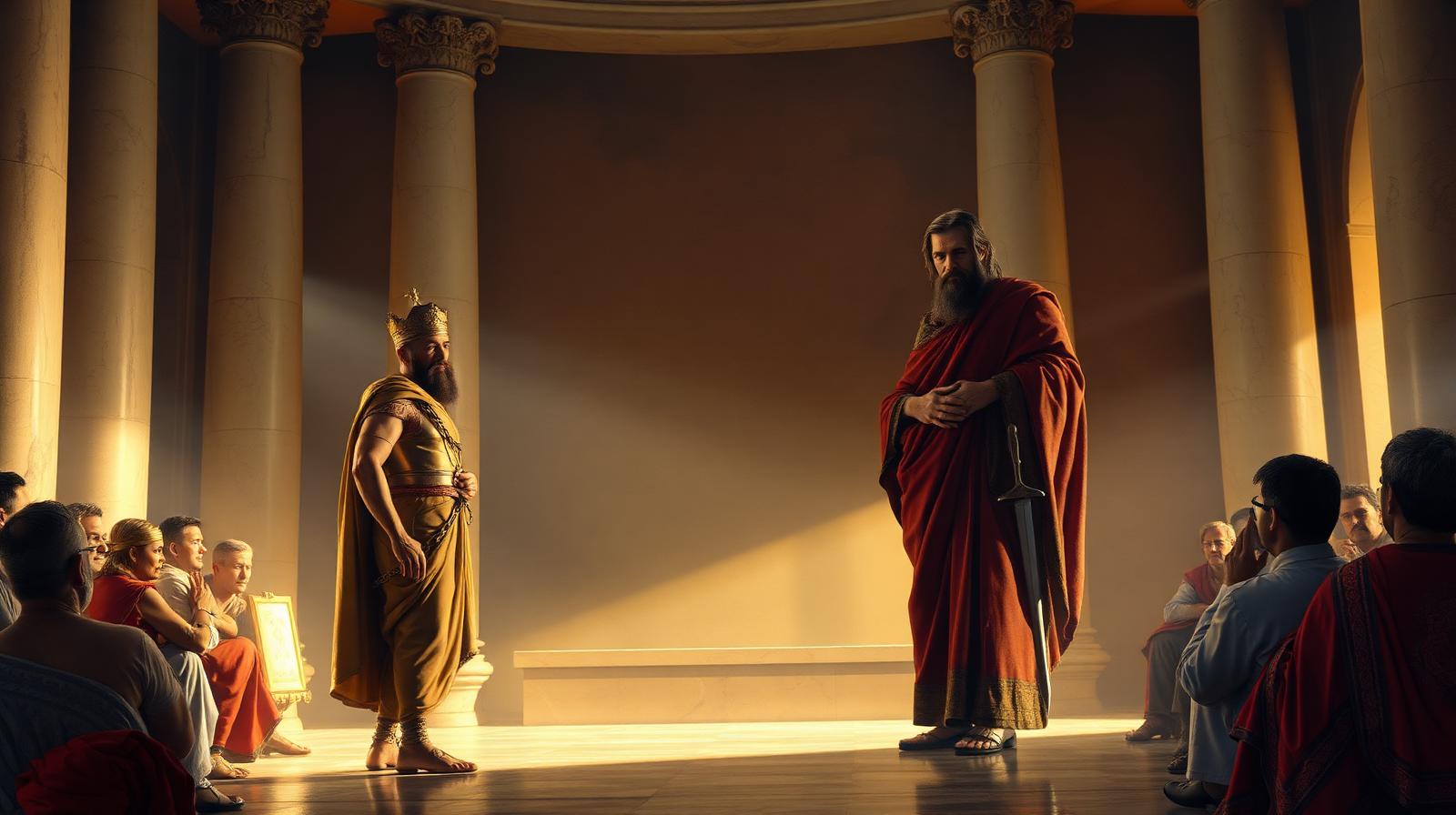
Finally, King Agrippa visits, and Paul gets to make his case before royalty. He tells his whole story once more — the persecutor, the light, the call to open people's eyes "and turn them from darkness to light." He's so compelling that Agrippa says, half-amused, half-shaken: "Do you think that in such a short time you can persuade me to be a Christian?" Agrippa concludes Paul has done nothing deserving death — "He could have been set free if he had not appealed to Caesar."

Watch · The Bible Project

LUMO Acts Ep.4 — Bound Yet Unstoppable

What God is communicating

Paul treats two years of unjust imprisonment and a parade of self-interested rulers as a pulpit. Felix, Festus, Agrippa — each one hears the gospel directly, and each one stalls: "when it's convenient," "later," "you almost persuade me." That's the quiet tragedy running under these chapters — people who are interested, even moved, but never quite decide. The most dangerous response to Jesus isn't a loud "no." It's "not yet."

Memory verse
Then Agrippa said to Paul, "Do you think that in such a short time you can persuade me to be a Christian?"

Acts 26:28

The Storm and the Shipwreck

Section 23

Acts 27:1–44

The Storm and the Shipwreck

Paul, still a prisoner, is put on a ship for Rome, and Luke — who is on board — gives us one of the most vivid sea-stories in ancient literature. It is sailing season's end, and Paul warns them not to risk the voyage. They sail anyway.

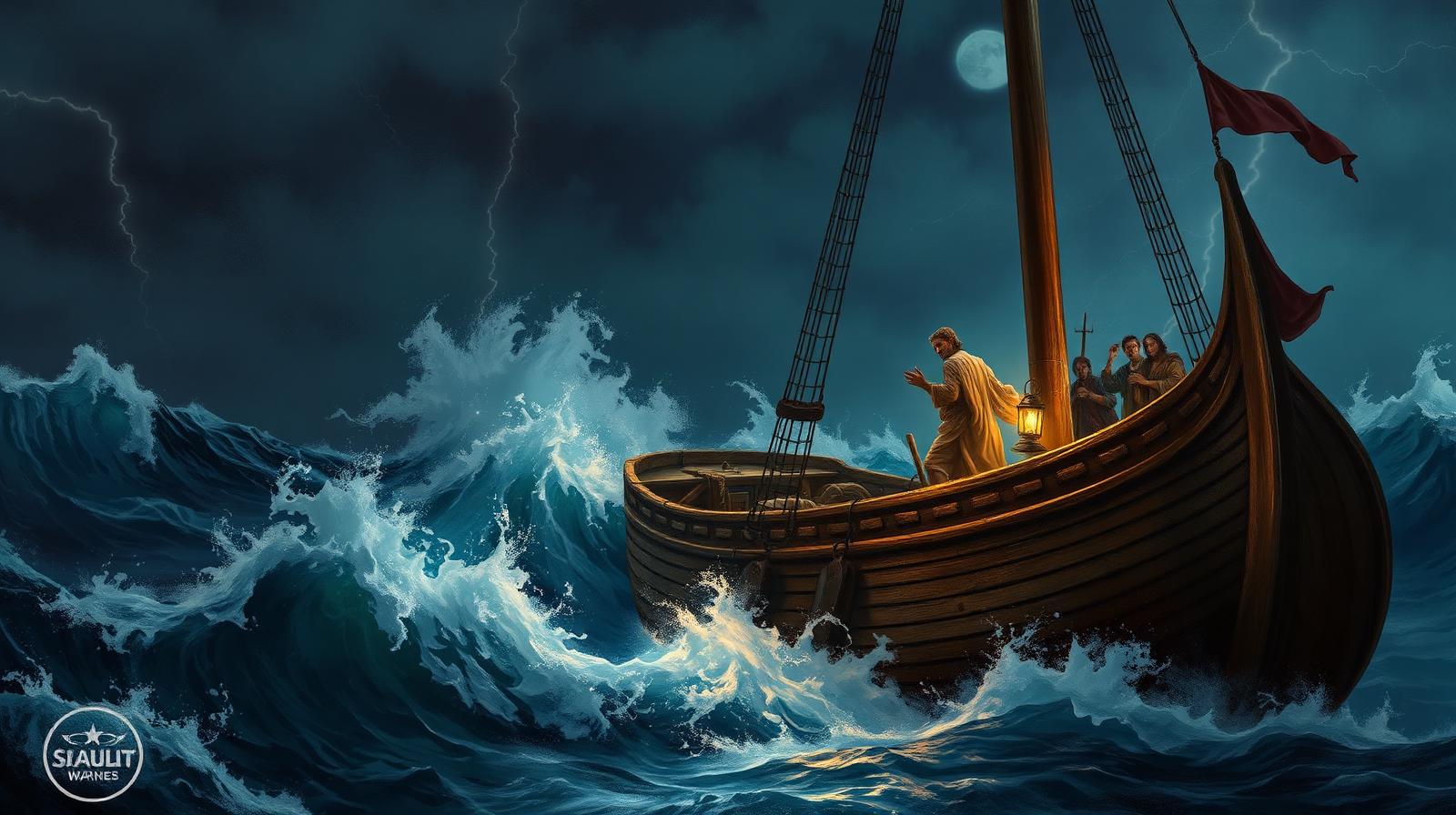
A ferocious northeaster catches the ship and drives it for days. The crew throws the cargo overboard, then the ship's tackle. The storm is so relentless that "we finally gave up all hope of being saved." Then Paul stands up — the prisoner becomes the calmest man aboard — and tells them an angel of God stood by him in the night: "Do not be afraid, Paul. You must stand trial before Caesar; and God has graciously given you the lives of all who sail with you." Not one of you will be lost, he says — only the ship. "I have faith in God that it will happen just as he told me."

On the fourteenth night they sense land. Paul urges the exhausted, starving men to eat, takes bread, gives thanks to God in front of all 276 of them, and they're encouraged. At dawn the ship runs aground and begins to break apart in the surf. The soldiers want to kill the prisoners so none escape, but the centurion — wanting to spare Paul — stops them and orders everyone overboard, some swimming, some clinging to planks. "And so it was that everyone reached land safely." Exactly as Paul had said.

Watch · The Bible Project

LUMO Acts Ep.4 — Bound Yet Unstoppable

What God is communicating

When everyone else has given up hope, the believer is the steady one — not because Paul is brave by nature, but because he trusts a God who keeps his word: "I have faith in God that it will happen just as he told me." Notice, too, that God's promise to save Paul becomes safety for all 276 strangers on the ship; the presence of one faithful person is a mercy to everyone around him. Storms are real, and faith doesn't always calm the sea — sometimes it just keeps you standing in it until you reach the shore.

Memory verse
So keep up your courage, men, for I have faith in God that it will happen just as he told me.

Acts 27:25

Malta to Rome: The Gospel Unhindered

Section 24

Acts 28:1–31

Malta to Rome: The Gospel Unhindered

The survivors wash up on Malta, where the islanders show them unusual kindness. As Paul gathers wood for the fire, a viper fastens onto his hand. The locals assume he's a murderer getting his due — but he shakes it off, unharmed, and they decide he must be a god. Paul spends the winter there, and God heals many of the islanders, beginning with the chief official's father.

After three months they sail again, and at last Paul reaches Rome — the goal Jesus named back in chapter 23. Believers from the city walk out along the road to meet him, and at the sight of them, "Paul thanked God and was encouraged." He's a prisoner, awaiting trial before Caesar, but he's allowed to live by himself with a soldier guarding him.

And here is how Luke chooses to end the whole book — not with Paul's trial, not with his death, but with a door left open. Paul calls the local Jewish leaders together, explains the kingdom of God, and tries to persuade them about Jesus from the Scriptures from morning till evening. Some are convinced; some are not. Then Luke's final sentence: for two whole years Paul stayed in his rented house, welcomed all who came to see him, "proclaiming the kingdom of God and teaching about the Lord Jesus Christ — with all boldness and without hindrance."

Watch · The Bible Project

LUMO Acts Ep.4 — Bound Yet Unstoppable

What God is communicating

The book ends mid-story on purpose. There's no neat conclusion, because the story isn't finished — it runs right up to the reader. The gospel that started in one upstairs room in Jerusalem is now being preached, openly and unstoppably, in the capital of the world. Chains couldn't stop it; storms couldn't stop it; courts couldn't stop it. The very last word in the original Greek is "unhindered." That open ending is an invitation: the witnesses now include everyone who picks up the story and carries it further — to the ends of the earth.

Memory verse
He proclaimed the kingdom of God and taught about the Lord Jesus Christ — with all boldness and without hindrance!

Acts 28:31

Acts at a Glance

The whole story on one page

All 24 sections · verses · themes

SectionVersesTheme
1. The Ascension and the Promise1:1–11Jesus ascends; the mission is named (1:8)
2. Waiting, and Choosing Matthias1:12–26Prayer and preparation; the Twelve restored
3. Pentecost: The Spirit Falls2:1–13Wind, fire, every language
4. Peter's Sermon and the First Church2:14–473,000 believe; life together
5. The Lame Man Healed at the Gate3:1–26"Silver or gold I do not have…"
6. Peter and John on Trial4:1–31"No other name"; prayer for boldness
7. Ananias and Sapphira4:32–5:11A generous church and a costly lie
8. The Apostles Arrested and Freed5:12–42"We must obey God rather than human beings"
9. Stephen — The First Martyr6:1–7:60The seven; Stephen's death; Saul watches
10. Philip: Samaria and the Ethiopian8:1–40The gospel crosses ethnic lines
11. The Conversion of Saul9:1–31The persecutor becomes the missionary
12. Peter and the Gentiles (Cornelius)9:32–11:18"God does not show favouritism"
13. Antioch, and Peter's Rescue11:19–12:25First "Christians"; Peter freed; Herod falls
14. The First Missionary Journey13:1–14:28Sent by the Spirit; "a light for the Gentiles"
15. The Jerusalem Council15:1–35Saved by grace, not law
16. Into Europe: Lydia and the Jailer15:36–16:40"Believe in the Lord Jesus and you will be saved"
17. Thessalonica, Berea, and Athens17:1–34Noble Bereans; the sermon at the Areopagus
18. Corinth18:1–22"I have many people in this city"
19. The Third Journey: Ephesus18:23–19:41Burned scrolls and a citywide riot
20. The Farewell at Miletus20:1–38"Finish the race"; goodbye to the elders
21. Arrested in Jerusalem21:1–23:35Riot, rescue, "you must testify in Rome"
22. On Trial: Felix, Festus, and Agrippa24:1–26:32"You almost persuade me to be a Christian"
23. The Storm and the Shipwreck27:1–44Faith holds when all hope is gone
24. Malta to Rome: The Gospel Unhindered28:1–31The open ending — the gospel reaches Rome
Tap ▶ to play background worship