Learning · Phase 3

The Book of Luke

The Gospel of the outsider. The poor. The lost.

24 chapters · 15 sections · New Testament · Gospel

The Story Begins With Wonder

Section 1

Luke 1:1–2:52

The Story Begins With Wonder

Luke opens not with a genealogy or a proclamation, but with two pregnancies. An old priest named Zechariah is serving in the temple when the angel Gabriel appears. His wife Elizabeth is barren and beyond childbearing age. Gabriel announces a son: his name will be John. Zechariah doubts. Gabriel's response is pointed: because you did not believe, you will be silent until the day this happens.

Six months later, Gabriel visits a young woman in Nazareth named Mary. "Do not be afraid, Mary; you have found favour with God. You will conceive and give birth to a son, and you are to call him Jesus." Mary's response is the opposite of Zechariah's — the most faith-filled sentence in the New Testament: "I am the Lord's servant. May your word to me be fulfilled."

Mary visits Elizabeth. The baby in Elizabeth's womb leaps. Mary sings the Magnificat — one of the most radical songs ever written: God has brought down rulers from their thrones. He has lifted up the humble. He has filled the hungry with good things and sent the rich away empty.

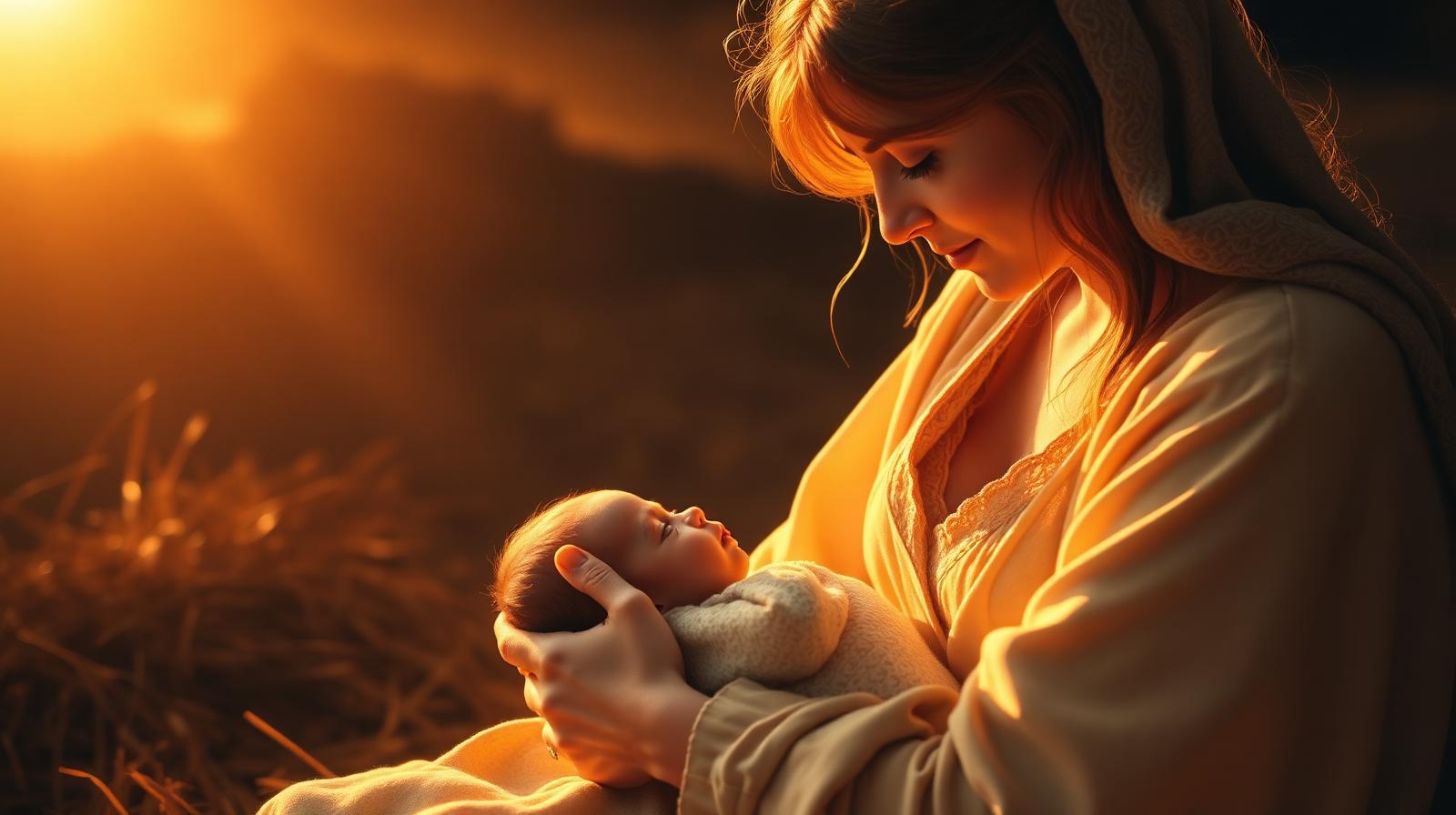
Then the census. Joseph and Mary travel to Bethlehem. No room in the inn. Jesus is born and laid in a manger. Shepherds in the fields nearby — the lowest-status workers in the region — are visited by an angel. The sky fills with a heavenly host. The shepherds rush to find the baby.

Forty days after birth, his parents bring him to the temple. An old man named Simeon takes the baby in his arms: "Sovereign Lord, as you have promised, you may now dismiss your servant in peace. For my eyes have seen your salvation." An elderly prophet named Anna arrives at the same moment and begins praising God. When Jesus is twelve, he stays behind in the temple, sitting with the teachers. "Didn't you know I had to be in my Father's house?"

Watch · The Bible Project

The Chosen — The Shepherds Find Baby Jesus

What God is communicating

Luke begins with song, wonder, and ordinary people receiving extraordinary news. The shepherds, the elderly prophet, the barren woman, the teenage girl — God enters the world through the overlooked. The Magnificat is not gentle comfort. It is a declaration that the entire order of things is being reversed. The last shall be first. This is the keynote of everything that follows.

Memory verse
I am the Lord's servant. May your word to me be fulfilled.

Luke 1:38

Baptism, Temptation, and the First Sermon

Section 2

Luke 3:1–4:44

Baptism, Temptation, and the First Sermon

Luke is the only Gospel writer to anchor his story in political history, dating the beginning of John's ministry precisely. Luke places the genealogy here — not at the opening like Matthew, but between the baptism and the temptation. And instead of tracing Jesus back to Abraham, Luke traces him all the way back to Adam — and to God. This is the Son of humanity. The second Adam who will succeed where the first failed.

Into the wilderness. Forty days. No food. The devil's three temptations come in a different order from Matthew — in Luke, the final temptation is on the pinnacle of the temple in Jerusalem, the holy city which will be the climax of Luke's entire story.

Jesus returns to Galilee in the power of the Spirit and goes to Nazareth, his hometown. In the synagogue on the Sabbath, he is handed the scroll of Isaiah and reads: "The Spirit of the Lord is on me, because he has anointed me to proclaim good news to the poor. He has sent me to proclaim freedom for the prisoners and recovery of sight for the blind, to set the oppressed free, to proclaim the year of the Lord's favour." He rolls up the scroll and sits down. "Today this scripture is fulfilled in your hearing."

They are amazed — then furious when Jesus implies God's grace extends beyond Israel. They try to throw him off a cliff. He walks through the crowd and goes on his way. He heals in Capernaum. As the sun sets, people bring him everyone who is sick. He heals them all.

Watch · The Bible Project

The Chosen — Sermon in Nazareth

What God is communicating

The Nazareth sermon is Luke's mission statement for Jesus — and by extension for BibleInc. Good news to the poor. Freedom for prisoners. Sight for the blind. Release for the oppressed. This is what the kingdom of God looks like in practice. It is not a private religious experience — it is a reversal of suffering, beginning now.

Memory verse
The Spirit of the Lord is on me, because he has anointed me to proclaim good news to the poor.

Luke 4:18

The Call and the Sermon on the Plain

Section 3

Luke 5:1–6:49

The Call and the Sermon on the Plain

Jesus is standing by the Lake of Gennesaret. The crowd presses around him. He gets into Simon's boat, pushes off from shore, sits down and teaches. When he has finished, he tells Simon: "Put out into deep water and let down the nets for a catch." Simon has fished all night and caught nothing. But: "Because you say so, I will let down the nets." The nets fill so full they begin to break. Both boats are so loaded they begin to sink.

Simon falls at Jesus' knees: "Go away from me, Lord; I am a sinful man!" Jesus: "Don't be afraid; from now on you will fish for people." They leave everything to follow him.

Jesus heals a man with leprosy, a paralysed man lowered through the roof. He calls Levi from his tax booth and eats with tax collectors and sinners. Conflict with the Pharisees grows. He heals on the Sabbath. They begin to plot. Then: "Jesus went out to a mountainside to pray, and spent the night praying to God." The whole night. Then he calls his disciples and chooses twelve apostles.

He comes down with them to a level place — the Sermon on the Plain, shorter and more pointed than Matthew's: "Blessed are you who are poor, for yours is the kingdom of God. Blessed are you who hunger now, for you will be satisfied. Blessed are you who weep now, for you will laugh." And the woes: "Woe to you who are rich, for you have already received your comfort."

Love your enemies. Do good to those who hate you. Turn the other cheek. Give to everyone who asks. Do to others as you would have them do to you. Why call me Lord if you don't do what I say? Build on rock, not sand.

Watch · The Bible Project

The Chosen — The Miracle of the Fish

What God is communicating

"Because you say so, I will let down the nets" — Simon's response is the posture of faith. Not because conditions are favourable. Not because the evidence is promising. Because Jesus said so. And out of that obedience comes abundance beyond anything they could have managed on their own. The Sermon on the Plain then sets out what the kingdom life looks like: upside-down values, radical generosity, love that has no limits.

Memory verse
Don't be afraid; from now on you will fish for people.

Luke 5:10

Faith From Unexpected Places

Section 4

Luke 7:1–8:56

Faith From Unexpected Places

A Roman centurion's servant is sick and about to die. The centurion sends friends: "Lord, don't trouble yourself, for I do not deserve to have you come under my roof... But say the word, and my servant will be healed." Jesus is amazed. "I tell you, I have not found such great faith even in Israel." The servant is healed.

Jesus approaches a town called Nain. A funeral procession — a widow's only son. His heart goes out to her. "Don't cry." He touches the coffin. "Young man, I say to you, get up!" The dead man sits up and begins to talk.

A Pharisee named Simon invites Jesus to dinner. A sinful woman comes in weeping, wets his feet with her tears, wipes them with her hair, pours perfume on them. Simon is scandalised. Jesus tells a story about two debtors and turns to the woman: "Your sins are forgiven... Your faith has saved you; go in peace."

The women who followed Jesus are named — Mary Magdalene, Joanna, Susanna, and many others, helping to support him out of their own means. Luke is doing something radical for his time: naming women as disciples and financial supporters.

The storm on the lake stilled. The demoniac in the region of the Gerasenes healed and sent home. Jairus's daughter raised. The woman healed of twelve years of bleeding.

Watch · The Bible Project

The Chosen — Jairus's Daughter

What God is communicating

Two people stand out as examples of faith: a Roman soldier and a sinful woman. Neither is a religious insider. The centurion trusts Jesus's authority completely from a distance. The woman pours out everything she has in gratitude. Jesus honours both extravagantly. Faith in Luke doesn't look like correct doctrine — it looks like trust and love, often from the people you least expect.

Memory verse
Your faith has saved you; go in peace.

Luke 7:50

Power, Revelation, and the Cost of Following

Section 5

Luke 9:1–50

Power, Revelation, and the Cost of Following

Jesus sends the Twelve out two by two with power and authority. Five thousand men, plus women and children. Five loaves. Two fish. Everyone eats. Twelve baskets left over.

Jesus is praying alone. "Who do the crowds say I am?" Elijah. John the Baptist. "But what about you? Who do you say I am?" Peter: "God's Messiah."

Jesus tells them strictly not to tell anyone — and then immediately explains what Messiah means: "The Son of Man must suffer many things and be rejected... and he must be killed and on the third day be raised to life." "Whoever wants to be my disciple must deny themselves and take up their cross daily and follow me."

Eight days later, Jesus takes Peter, James and John up a mountain to pray. As he is praying, his face changes, his clothes become as bright as a flash of lightning. Moses and Elijah appear and talk with him about — and Luke is the only Gospel to tell us this — his exodus, which he was about to bring to fulfilment in Jerusalem. A cloud covers them. A voice: "This is my Son, whom I have chosen; listen to him!"

An argument breaks out about who is greatest. Jesus puts a child beside him: "It is the one who is least among you all who is the greatest."

Watch · The Bible Project

The Chosen — Feeding the 5,000

What God is communicating

"Take up your cross daily." Luke is the only Gospel that adds the word daily. This is not a one-time sacrifice — it is a way of living. Every day, the choice to follow Jesus costs something. The Transfiguration gives the disciples a glimpse of who Jesus really is — not so they can stay on the mountain, but so they have something to hold onto when everything gets dark. The glory is real. The cross is also real. Both are necessary.

Memory verse
Whoever wants to be my disciple must deny themselves and take up their cross daily and follow me.

Luke 9:23

The Journey South, and What Matters Most

Section 6

Luke 9:51–10:42

The Journey South, and What Matters Most

"As the time approached for him to be taken up to heaven, Jesus resolutely set his face toward Jerusalem." This verse marks the turning point of the entire Gospel. From here until chapter 19, Jesus is on the road. Everything happens along the way.

He sends messengers ahead into a Samaritan village. They do not welcome him. James and John: "Lord, do you want us to call fire down from heaven to destroy them?" Jesus rebukes them.

Three people offer to follow him. Jesus' responses are not encouraging: "Foxes have dens and birds have nests, but the Son of Man has no place to lay his head." The cost is real.

Jesus appoints seventy-two and sends them out two by two. They return with joy. An expert in the law asks: "What must I do to inherit eternal life?" Love God, love your neighbour. "And who is my neighbour?"

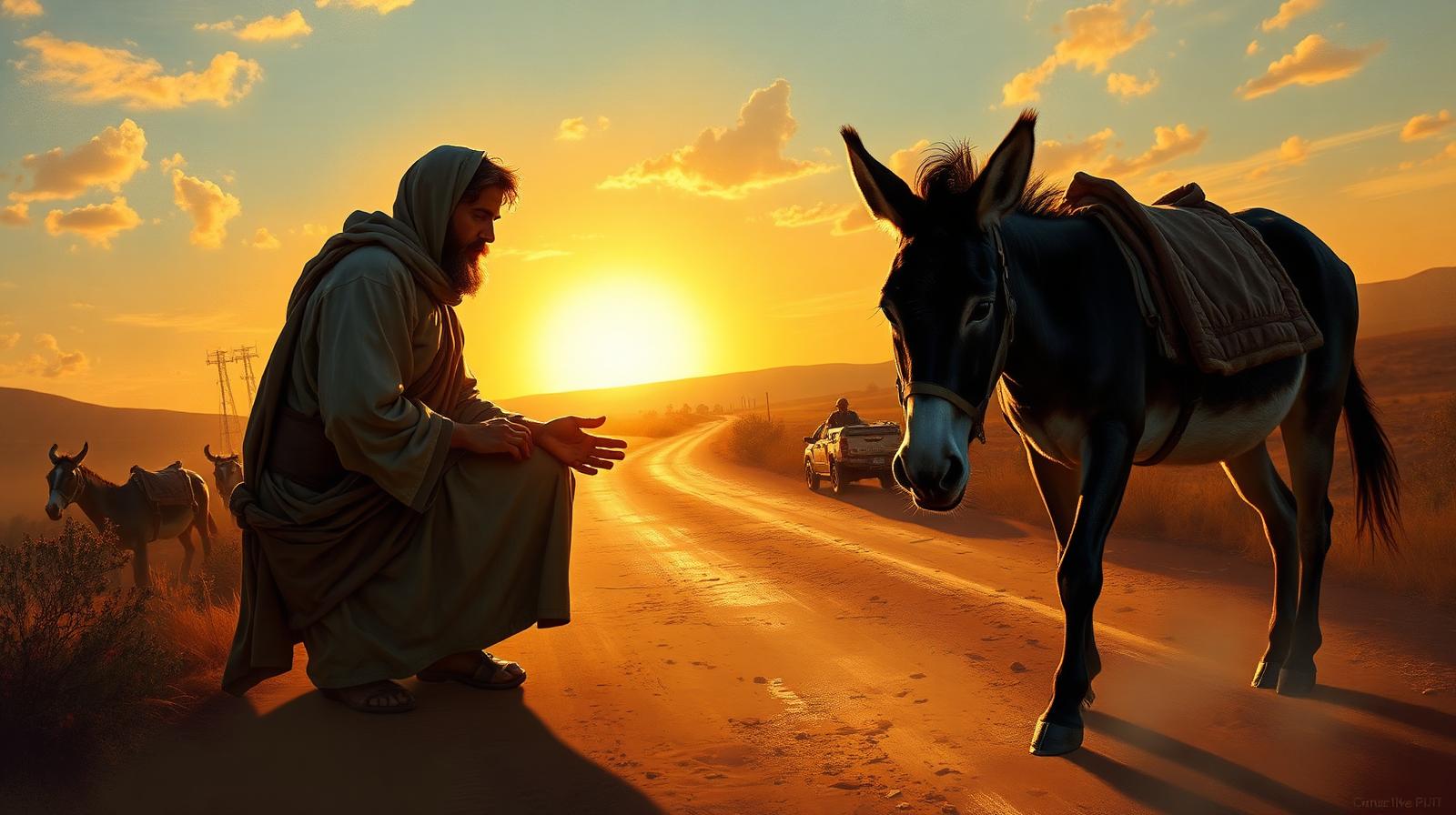
The parable of the Good Samaritan. A man is beaten by robbers. A priest passes by. A Levite passes by. A Samaritan — an outsider — has compassion, bandages his wounds, takes him to an inn, pays for his care. Which was a neighbour? "The one who had mercy." "Go and do likewise."

At Mary and Martha's home, Martha is busy. Mary sits at Jesus's feet, listening. "Martha, Martha, you are worried and upset about many things, but few things are needed — or indeed only one. Mary has chosen what is better."

Watch · The Bible Project

The Chosen — Mary and Martha

What God is communicating

The Good Samaritan does not ask "who is my neighbour?" before acting. He simply sees a human being in need and responds. Jesus's answer to the question is: stop asking. Start being one. The story of Mary and Martha isn't about housework — it's about what the most important thing is. All the activity in the world cannot substitute for sitting with Jesus.

Memory verse
Go and do likewise.

Luke 10:37

Prayer, Warning, and Don't Be Afraid

Section 7

Luke 11:1–12:59

Prayer, Warning, and Don't Be Afraid

Jesus is praying. When he finishes, a disciple asks: "Lord, teach us to pray." He gives them the Lord's Prayer — shorter in Luke than in Matthew. Then a story about a friend knocking at midnight asking for bread. "Ask and it will be given to you; seek and you will find; knock and the door will be opened to you." If earthly fathers know how to give good gifts — how much more will your Father in heaven give the Holy Spirit to those who ask him.

Conflict escalates. Jesus is accused of driving out demons by Beelzebul. He warns about inner darkness: "See to it, then, that the light within you is not darkness." Invited to eat with a Pharisee, he unleashes woes: you clean the outside of the cup but inside are full of greed. You give a tenth of your herbs but neglect justice.

A crowd of thousands trampling one another. "Don't be afraid of those who can kill the body. Fear the one who has authority over what comes after death." But: "Don't be afraid; you are worth more than many sparrows."

The parable of the rich fool. A man's land produces so abundantly he tears down his barns to build bigger ones. "Take life easy; eat, drink and be merry." God: "You fool! This very night your life will be demanded from you." This is what it is like for anyone who stores up things for themselves but is not rich toward God.

Do not worry. Seek his kingdom. Sell your possessions and give to the poor. "For where your treasure is, there your heart will be also."

Watch · The Bible Project

The Chosen — Jesus Teaches How to Pray

What God is communicating

Luke's teaching on prayer is intimate — Jesus praying himself and then being asked how. The God revealed here is not a vending machine and not an angry judge. He is a Father who gives good gifts to his children, including the greatest gift: the Holy Spirit. The parable of the rich fool is about one thing: mistaking accumulation for life. The antidote is being "rich toward God" — a phrase Luke leaves deliberately open. It could mean generosity. It could mean attention. It could mean love.

Memory verse
For where your treasure is, there your heart will be also.

Luke 12:34

Urgency, Reversals, and the Cost of the Banquet

Section 8

Luke 13:1–14:35

Urgency, Reversals, and the Cost of the Banquet

Some tell Jesus about Galileans whose blood Pilate had mixed with their sacrifices. Jesus turns it into a question about repentance. The parable of the barren fig tree: cut it down. The gardener pleads: give it one more year. Urgency and patience held together.

On the Sabbath, Jesus heals a woman bent double for eighteen years. The synagogue leader is indignant. "You hypocrites! Should not this woman, a daughter of Abraham, who has been kept bound for eighteen years, be set free on the Sabbath day?"

The mustard seed. The yeast in the dough. The narrow door. Jesus weeps over Jerusalem: "How often I have longed to gather your children together, as a hen gathers her chicks under her wings, and you were not willing."

At a Pharisee's house, Jesus watches guests choosing the places of honour and tells a parable: don't take the best seat. "For all those who exalt themselves will be humbled, and those who humble themselves will be exalted." He tells his host: don't invite friends who can repay you. Invite the poor, the crippled, the lame, the blind.

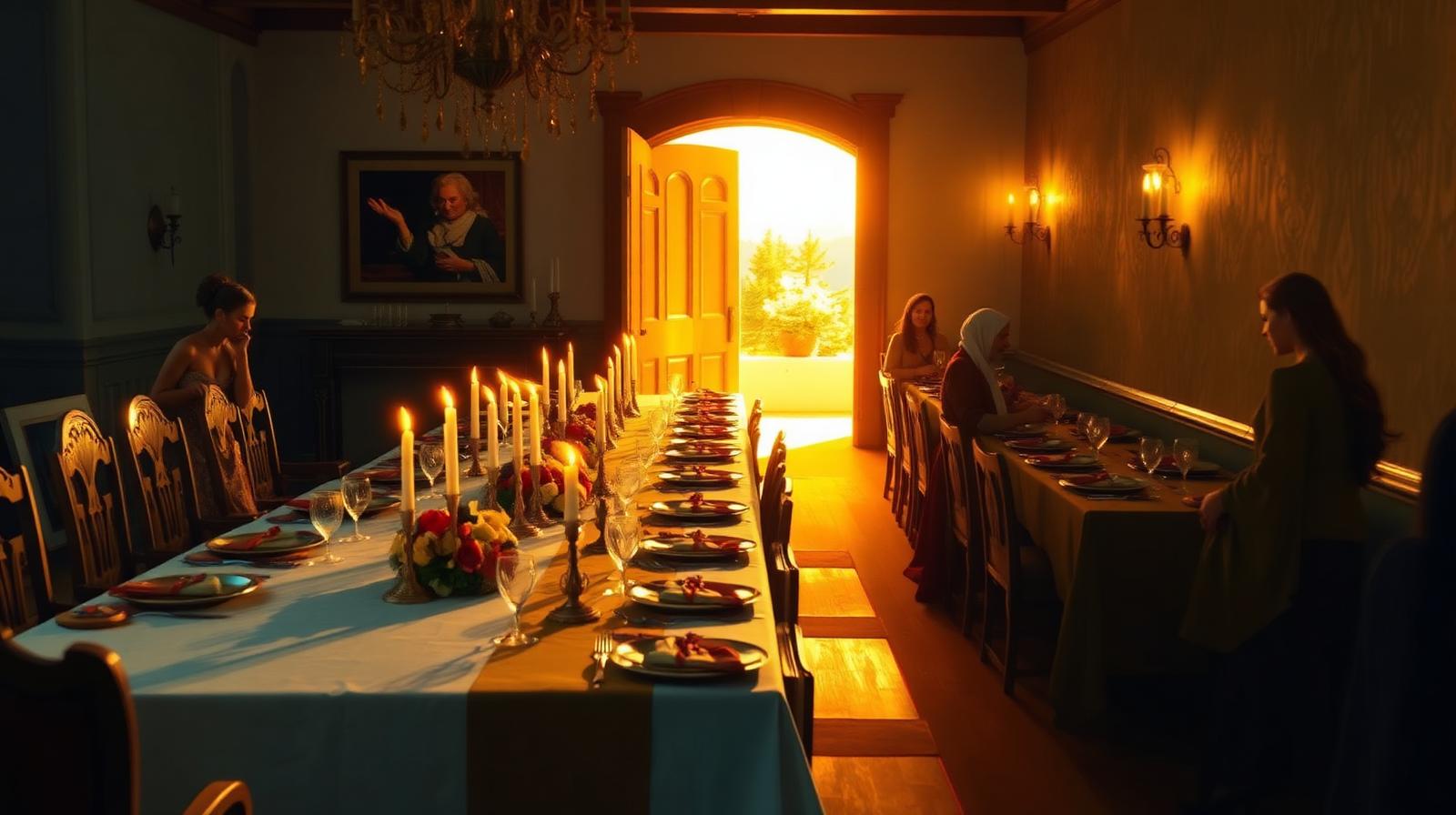
The parable of the great banquet. A man prepares a great feast. At the time, the guests all make excuses. The master sends his servant: "Go out quickly into the streets and alleys and bring in the poor, the crippled, the blind and the lame." Still there's room. "Go out to the roads and country lanes and compel them to come in, so that my house will be full."

Watch · The Bible Project

LUMO — Gospel of Luke Ch. 14

What God is communicating

The parable of the great banquet is the heart of Luke's Gospel in miniature. Those first invited — the insiders, the comfortable, the established — are too busy with their acquisitions to come. So the feast fills with outsiders: the poor, the broken, the people on the margins. God's table has plenty of room. The only question is whether you are too busy to come.

Memory verse
For all those who exalt themselves will be humbled, and those who humble themselves will be exalted.

Luke 14:11

Three Parables of the Lost

Section 9

Luke 15:1–16:31

Three Parables of the Lost

Tax collectors and sinners are all gathering around Jesus. The Pharisees mutter: "This man welcomes sinners and eats with them." Jesus tells three parables — among the most famous stories ever told.

The Lost Sheep. A man has a hundred sheep. One goes missing. He leaves the ninety-nine and searches until he finds it. "I tell you that in the same way there will be more rejoicing in heaven over one sinner who repents than over ninety-nine righteous persons who do not need to repent."

The Lost Coin. A woman has ten silver coins. She loses one. She lights a lamp, sweeps the entire house, and searches carefully until she finds it.

The Prodigal Son — or more accurately, the story of two lost sons and a running father. The younger son demands his inheritance early — effectively telling his father he wishes he were dead. He wastes it all. A famine hits. He ends up feeding pigs. He comes to his senses and decides to go home as a hired servant.

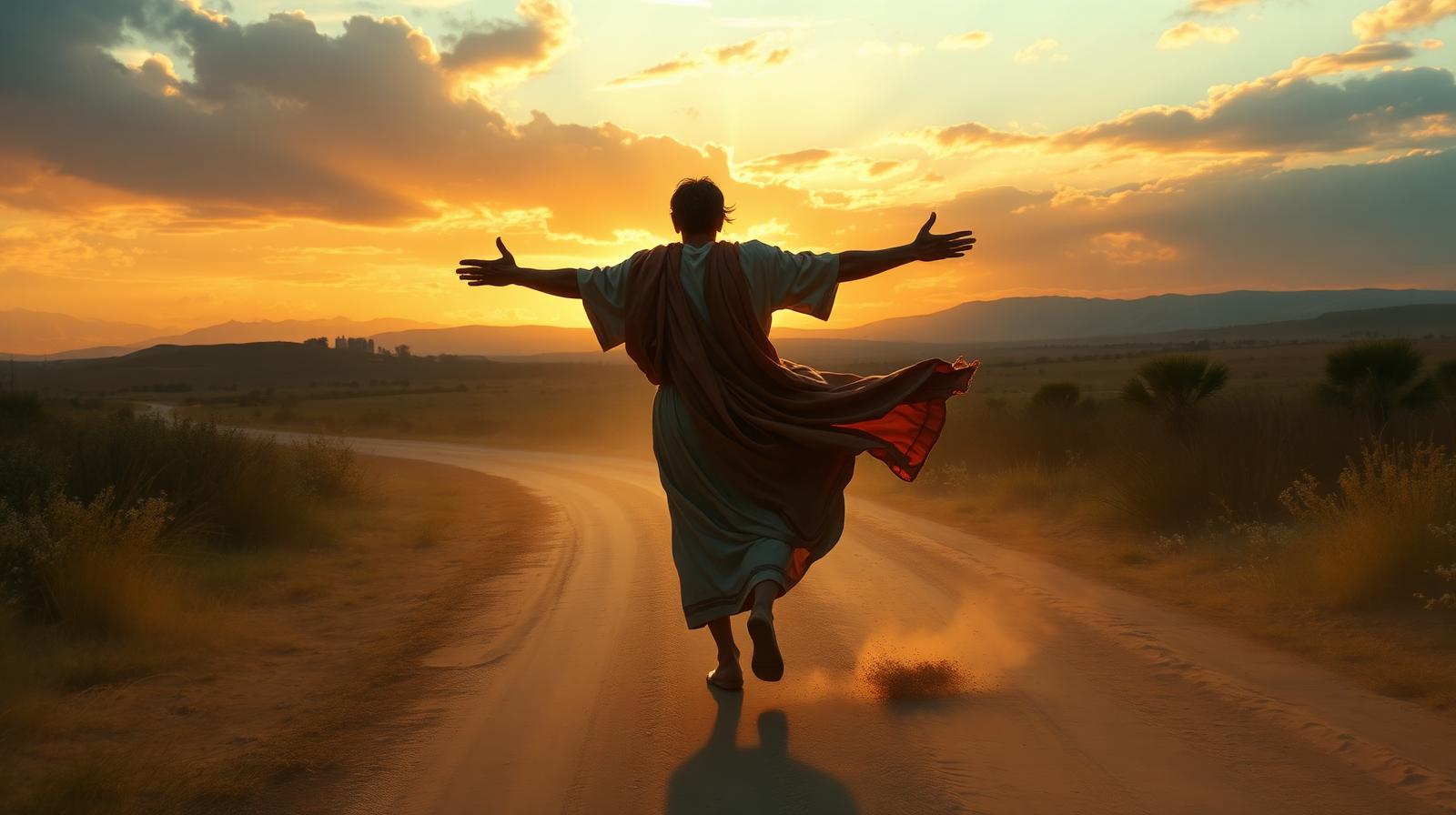
"But while he was still a long way off, his father saw him and was filled with compassion for him; he ran to his son, threw his arms around him and kissed him." The father calls for the best robe, a ring, sandals, the fattened calf. "My son was dead and is alive again; he was lost and is found."

The older son is outside, furious. He has been here all along. The father comes out to him: "Son, you are always with me, and everything I have is yours. But we had to celebrate." The story ends without telling us what the older son decides. The door is open. The feast is happening. Whether he goes in is left to the reader.

Watch · The Bible Project

LUMO — Gospel of Luke Ch. 15 (Prodigal Son)

What God is communicating

The father in the prodigal son story runs. In the ancient Near East, a man of dignity does not run — it is undignified. The father runs. This is who God is: not waiting at the door with arms folded, not delivering a measured response, but running to meet us while we are still a long way off. The older son's anger is understandable and deeply human. It is also the posture of the Pharisees, and the reason they cannot celebrate what Jesus is doing.

Memory verse
But while he was still a long way off, his father saw him and was filled with compassion for him; he ran to his son, threw his arms around him and kissed him.

Luke 15:20

Faith, Prayer, and the Kingdom Among You

Section 10

Luke 17:1–18:43

Faith, Prayer, and the Kingdom Among You

Jesus teaches about forgiveness: if your brother sins against you seven times in a day and seven times says "I repent," forgive them. The apostles: "Increase our faith!" Jesus: "If you have faith as small as a mustard seed..."

Ten men with leprosy call out. He heals all ten. Only one returns to give thanks — and he is a Samaritan. "Were not all ten cleansed? Where are the other nine?"

The Pharisees ask when the kingdom of God will come. Jesus: "The kingdom of God is in your midst."

Two parables about prayer. The persistent widow keeps coming before an unjust judge until he relents. If an unjust judge gives justice when pressed, how much more will God bring justice to his chosen ones?

The Pharisee and the tax collector. The Pharisee prays: thank you God that I am not like other people — robbers, evildoers, adulterers, or even like this tax collector. The tax collector stands at a distance, will not even look up, and beats his breast: "God, have mercy on me, a sinner." Jesus: "I tell you that this man, rather than the other, went home justified before God."

A rich ruler asks what he must do to inherit eternal life. Jesus tells him to sell everything and give to the poor. He becomes very sad. Blind Bartimaeus calls out on the road. "Receive your sight; your faith has healed you."

Watch · The Bible Project

LUMO — Gospel of Luke Ch. 18

What God is communicating

The tax collector's prayer — "God, have mercy on me, a sinner" — is one of the most important prayers in scripture. It has become the basis of the Jesus Prayer in Orthodox Christianity, prayed millions of times over centuries. It works because it is completely honest. No performance. No comparison. Just need and trust. The kingdom of God belongs to people who pray like that.

Memory verse
God, have mercy on me, a sinner.

Luke 18:13

Zacchaeus, the King's Entry, and the Temple

Section 11

Luke 19:1–21:4

Zacchaeus, the King's Entry, and the Temple

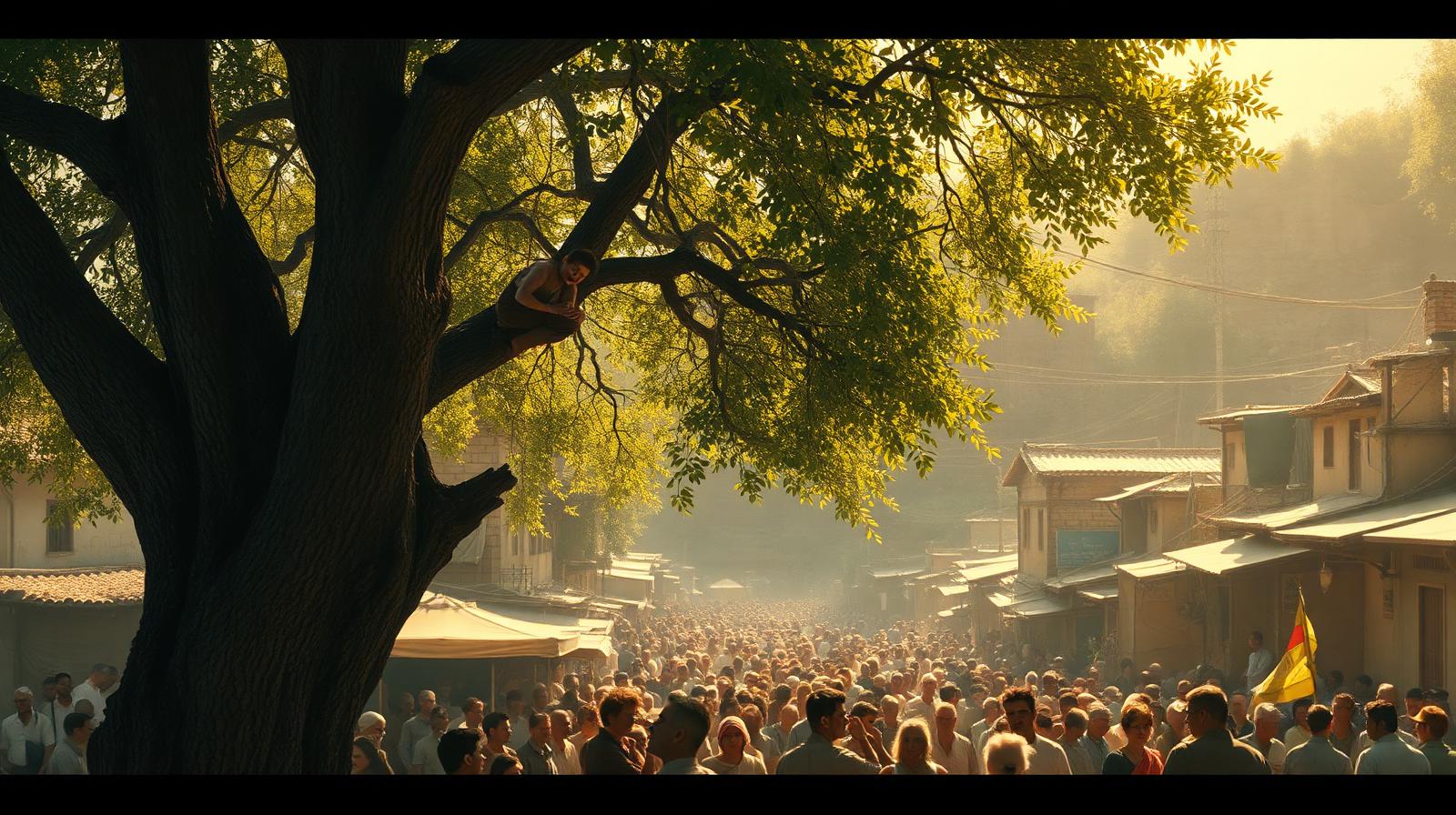
Jesus passes through Jericho. A chief tax collector named Zacchaeus wants to see Jesus but cannot because of the crowd — he is short. He runs ahead and climbs a sycamore tree. Jesus reaches the spot, looks up: "Zacchaeus, come down immediately. I must stay at your house today."

Zacchaeus stands: "Here and now I give half of my possessions to the poor, and if I have cheated anybody out of anything, I will pay back four times the amount." Jesus: "Today salvation has come to this house... For the Son of Man came to seek and to save the lost."

The triumphal entry. The crowd shouts: "Blessed is the king who comes in the name of the Lord!" The Pharisees tell Jesus to rebuke them. "I tell you, if they keep quiet, the stones will cry out."

He weeps over the city. He enters the temple and drives out those selling: "My house will be a house of prayer; but you have made it a den of robbers." Every day he teaches in the temple. The chief priests are trying to kill him but cannot find a way, because all the people hang on his words.

He sits opposite the temple treasury. Many wealthy people throw in large amounts. A poor widow puts in two very small copper coins. "Truly I tell you, this poor widow has put in more than all the others. All these people gave their gifts out of their wealth; but she out of her poverty put in all she had to live on."

Watch · The Bible Project

The Chosen — The Triumphal Entry

What God is communicating

Zacchaeus is the final example of what salvation looks like in Luke: not a feeling, not a prayer formula, but a transformed relationship with money. He gives half to the poor and repays fourfold anyone he has cheated. Jesus does not extract this from him — it comes out of the encounter. When someone truly meets Jesus, their wallet opens. The widow's offering says the same thing from the other side: the poor who give everything have understood something the wealthy never will.

Memory verse
For the Son of Man came to seek and to save the lost.

Luke 19:10

The End, the Last Supper, and the Garden

Section 12

Luke 21:5–22:46

The End, the Last Supper, and the Garden

As some admire the temple, Jesus says: "The time will come when not one stone will be left on another." He warns of false messiahs, wars, famines, signs in the heavens. Then "the Son of Man coming in a cloud with power and great glory." "When these things begin to take place, stand up and lift your heads, because your redemption is drawing near."

"Be careful, or your hearts will be weighed down with carousing, drunkenness and the anxieties of life, and that day will close on you suddenly like a trap." Be alert and pray always.

Passover approaches. Judas agrees to betray Jesus for money. The Last Supper. Jesus takes the bread, gives thanks, breaks it: "This is my body given for you; do this in remembrance of me." Then the cup: "This cup is the new covenant in my blood, which is poured out for you."

An argument breaks out about which of them is the greatest. Jesus: "The greatest among you should be like the youngest, and the one who rules like the one who serves... I am among you as one who serves." He tells Simon Peter that Satan has asked to sift him like wheat — but he has prayed for him.

The Mount of Olives. Jesus kneels and prays: "Father, if you are willing, take this cup from me; yet not my will, but yours be done." An angel appears and strengthens him. His sweat is like drops of blood falling to the ground. He returns to find the disciples sleeping from exhaustion and grief.

Watch · The Bible Project

LUMO — Gospel of Luke 22:14–38 (Last Supper)

What God is communicating

"Not my will, but yours be done." Everything in Luke has been building to this moment — the point at which the Son of God surrenders completely to the Father's plan, even though it means the cross. This is the opposite of the prodigal son's "give me my share." This is the older brother's obedience without the older brother's resentment. This prayer, prayed in agony in a garden, is the hinge of all of human history.

Memory verse
Father, if you are willing, take this cup from me; yet not my will, but yours be done.

Luke 22:42

The Arrest, the Trials, and the Cross

Section 13

Luke 22:47–23:56

The Arrest, the Trials, and the Cross

Judas arrives with a crowd and approaches Jesus to kiss him. Jesus: "Judas, are you betraying the Son of Man with a kiss?" One of the disciples strikes the ear of the high priest's servant. Jesus stops it — and heals the man's ear.

Peter follows at a distance. Three times he is identified as one of Jesus's companions. Three times he denies it. The rooster crows. Jesus turns and looks straight at Peter. Peter remembers. He goes outside and weeps bitterly.

Jesus is brought before the Sanhedrin, then Pilate, then Herod, then back to Pilate. Pilate three times says he has found no guilt in this man. But the crowd shouts "Crucify him!" and their shouts prevail.

Simon of Cyrene carries the cross. To the wailing women: "Daughters of Jerusalem, do not weep for me; weep for yourselves." They crucify him at Golgotha. Two criminals, one on either side. Jesus: "Father, forgive them, for they do not know what they are doing."

One criminal mocks. The other rebukes him: "We are getting what we deserve. But this man has done nothing wrong." He turns to Jesus: "Jesus, remember me when you come into your kingdom." Jesus: "Truly I tell you, today you will be with me in paradise."

From noon until three, darkness covers the land. The temple curtain tears in two. Jesus calls out: "Father, into your hands I commit my spirit." He breathes his last. The centurion: "Surely this was a righteous man." Joseph of Arimathea wraps the body in linen and places it in a rock tomb.

Watch · The Bible Project

BibleProject — The Crucifixion (Luke 19–23)

What God is communicating

Luke records two unique moments at the cross found nowhere else: Jesus healing the soldier's ear — the last healing of his ministry — and the exchange with the criminal on the cross beside him. The last person Jesus saves before his death is a man dying for his crimes, with no ability to perform any religious duty, no church to belong to, nothing to offer but a request. "Remember me." That is enough. That has always been enough.

Memory verse
Father, forgive them, for they do not know what they are doing.

Luke 23:34

The Empty Tomb and the Road to Emmaus

Section 14

Luke 24:1–53

The Empty Tomb and the Road to Emmaus

Very early on the first day of the week, the women come to the tomb with the spices they have prepared. They find the stone rolled away. They enter — the body is gone. Two men in clothes that gleam like lightning: "Why do you look for the living among the dead? He is not here; he has risen!" They remember. They run and tell the Eleven. Peter runs to the tomb, sees the strips of linen, and goes away wondering.

That same day, two disciples are walking to Emmaus, about seven miles from Jerusalem. Jesus himself comes up and walks along with them — but they are kept from recognising him. He asks what they are discussing. They stop, faces downcast. They tell him everything. "We had hoped that he was the one who was going to redeem Israel."

"How foolish you are, and how slow to believe all that the prophets have spoken! Did not the Messiah have to suffer these things and then enter his glory?" Beginning with Moses and all the Prophets, he explains what was said in all the scriptures concerning himself.

They urge him to stay. He goes in. He takes bread, gives thanks, breaks it, and gives it to them. Their eyes are opened and they recognise him — and he disappears. "Were not our hearts burning within us while he talked with us on the road and opened the scriptures to us?"

They return to Jerusalem at once. Jesus appears among them: "Peace be with you." He shows them his hands and feet. He eats a piece of broiled fish in front of them. He opens their minds to understand the scriptures. "You are witnesses of these things... stay in the city until you have been clothed with power from on high."

He leads them to Bethany, lifts his hands and blesses them. While he is blessing them, he is taken up into heaven. They worship him and return to Jerusalem with great joy. And they are in the temple continually, praising God.

Watch · The Bible Project

BibleProject — The Resurrection (Luke 24)

What God is communicating

The road to Emmaus is the most beautiful resurrection story ever written. Two disciples, walking away from Jerusalem in grief and confusion, have the risen Jesus walk beside them for miles — and don't recognise him until he breaks bread. Their hearts were burning the whole time. The resurrection does not announce itself with trumpet blasts. It arrives quietly, beside grieving people on dusty roads, through scripture and the breaking of bread. This is still how it comes.

Memory verse
Were not our hearts burning within us while he talked with us on the road and opened the scriptures to us?

Luke 24:32

What Luke Wants You to Know

Section 15

Luke: The Whole Story

What Luke Wants You to Know

Luke is the Gospel of the Holy Spirit, the poor, and the outsider. From the opening song of Mary to the burning hearts on the road to Emmaus, it is suffused with joy, prayer, and the sense that something entirely new has broken into the world.

The poor matter to God. The Magnificat declares it. The beatitudes confirm it. The parable of the rich fool warns against ignoring it. The widow's offering honours it. Zacchaeus embodies the transformation it produces. If you want to know where Jesus is, find the poor. He will be there.

Women are disciples. Mary of Bethany sits at Jesus's feet — the posture of a disciple in the ancient world. Mary Magdalene, Joanna, Susanna fund the ministry. The women go to the tomb first. The women tell the men. In a world where a woman's testimony was legally inadmissible, Luke makes them the first witnesses of the resurrection.

The outsider is welcomed. The Samaritan is the hero of the most famous parable. The Samaritan leper is the only one who returns to give thanks. The Gentile centurion has greater faith than anyone in Israel. The tax collectors and sinners crowd around Jesus while the religious insiders keep their distance.

Prayer is the heartbeat of Jesus. Luke records Jesus praying at his baptism, before choosing the Twelve, at the Transfiguration, in Gethsemane. He teaches on prayer more than any other Gospel writer — the Lord's Prayer, the persistent widow, the Pharisee and the tax collector. All Luke.

The Holy Spirit is active and present. From the first chapter through the baptism, the temptation, the Nazareth sermon, and the promise of the Father — the Spirit is the breath of everything that happens in this Gospel.

Luke ends not with a command (Matthew's Great Commission) or a silence (Mark's fearful women) but with joy and worship. The disciples return to Jerusalem with great joy and are continually in the temple, praising God. The story is not over — Luke will pick it up again in Acts. But the note it ends on is worship.

What God is communicating

If you read Luke and come away thinking Christianity is primarily for religious insiders — for the moral, the established, the powerful — you have missed it entirely. Luke's Gospel is for the lost, the broken, the foreign, the female, the poor, and the sinful. The father runs. The feast is set. The invitation goes to everyone the first guests were too comfortable to include. And the risen Jesus walks beside grieving people on dusty roads, his presence recognised in the breaking of bread. That is the Gospel of Luke. And it is very good news.

Memory verse
The Son of Man came to seek and to save the lost.

Luke 19:10

Tap ▶ to play background worship